
From SEO to GEO: Independent website optimization practical workflow
This article systematically introduces the SEO and GEO implementation methods of B2B foreign trade independent stations, from unifying brand entities and planning website structure to improving procurement content, configuring structured data and technical SEO, helping companies let AI identify who you are, understand what you do, trust you, and ultimately quote and recommend your brand.
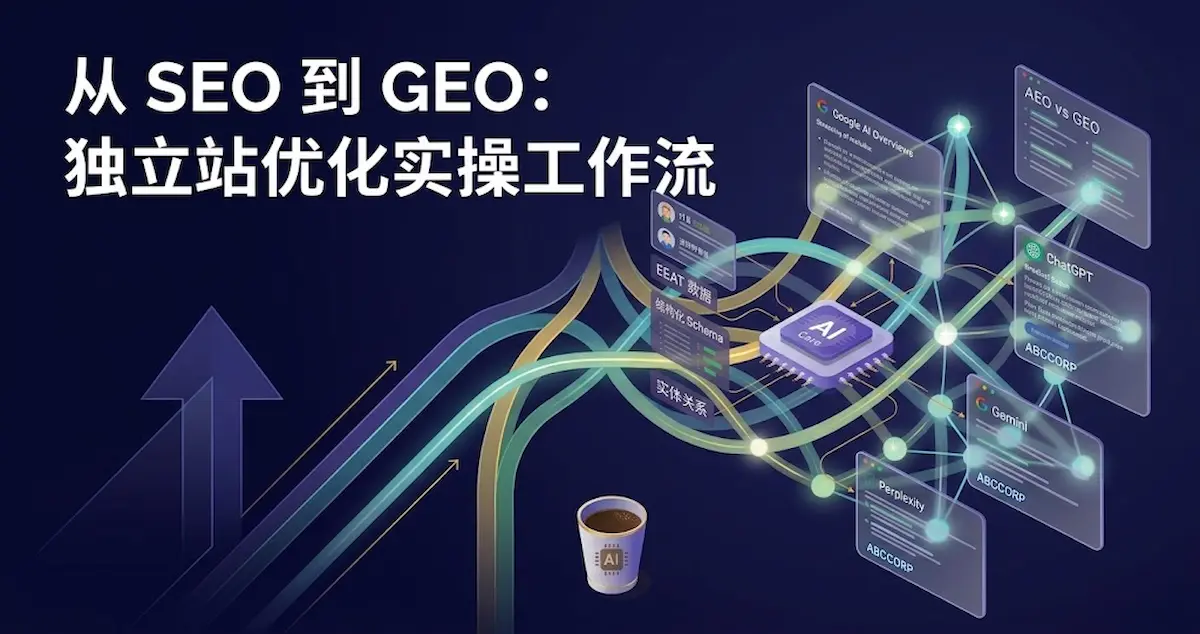
Core Goals:
Let AI recognize you as an authentic, professional, and trustworthy brand entity.
Final results to be achieved
-
AI knows who you are -
AI knows what product you make -
AI knows which customers you serve -
AI can understand your professional content -
AI thinks you are eligible to be cited -
AI will have the opportunity to mention your brand, product or article when answering buyers’ questions
GEO is not just about ranking
-
Traditional SEO focuses more on keyword rankings and clicks -
GEO pays more attention to whether AI can understand, quote and recommend your content -
The focus of the B-end foreign trade station is not just to generate traffic, but to enter into the AI survey results of buyers
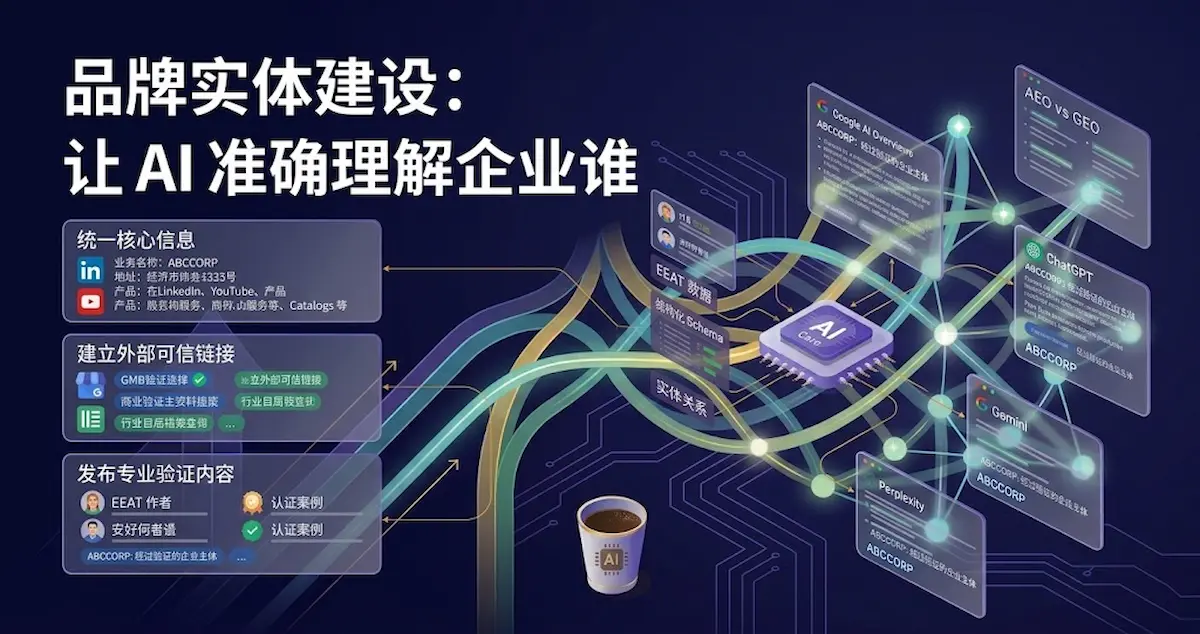
Phase 1: Brand entity construction
1.1 Clarify the basic brand information
Information that must be unified
-
Company name -
Brand name -
Official website domain name -
Logo -
Company Profile -
Main products -
Serving countries/markets -
Contact Information -
Social media homepage -
Factory/Office/Team Information
Execution Key Points
-
The brand names on the official website, LinkedIn, Facebook, YouTube, Google Business, and B2B platforms must be consistent -
Company introduction cannot write A in one place and B in another place -
Logo, domain name, and contact information should be kept as unified as possible -
The About Us page should clearly state: who you are, what you do, who you serve, what abilities you have, what your advantages are, and corporate vision
1.2 official website as the main entity source
Must-do page
-
Home -
About Us -
Products -
Product Category -
Blog -
FAQ -
Contact -
Factory/Capability -
Certificates -
Case Studies
About Us page highlights
-
Company establishment background -
Core products -
Production Capacity -
Service Market -
Customer Type -
Quality Control -
Certification Qualification -
Real pictures of the team/factory
1.3 Google Business Profile
Function
-
Enhance real corporate signals -
Improve the credibility of local entities -
Enhance Google’s judgment of brand authenticity -
Accumulate the foundation for future Knowledge Graph
Note
-
Google Business Profile cannot directly generate Knowledge Panel -
It just enhances the brand entity signal -
Foreign trade companies can use Service Area Business mode -
Brand name, address, phone number, official website, and description must be consistent with the official website
1.4 Knowledge Panel cognition
Correct understanding
-
Knowledge Panel is a brand knowledge panel automatically generated by Google -
Free -
Cannot be purchased directly -
There is no guarantee that the application will be successful -
You may only appear after Google determines that you are a trusted brand entity
Influencing factors
-
The official website entity information is complete -
Organization Schema complete -
sameAs clear association -
Google Business Verified -
LinkedIn / YouTube / Facebook and other social media are consistent -
Industry directories and media have brand references -
Have a certain brand search volume -
Have authoritative database records, such as Wikidata, Crunchbase, etc.
Second stage: website structure planning
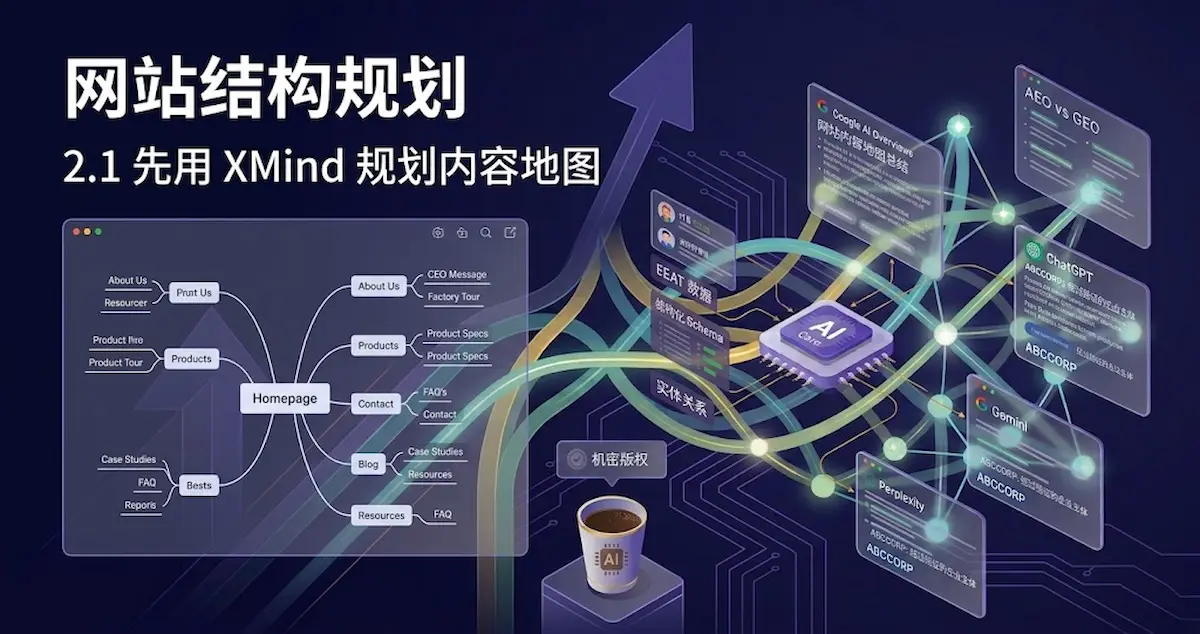
2.1 First use XMind to plan the content map
Wrong way:
-
Build a website first -
Write whatever you want -
Product classification is confusing -
Blog topics are scattered -
The cost of changing the URL and structure later is very high
Correct way:
-
Use XMind to draw the structure first -
Confirm the column again -
Replan URL -
Start website building and content production again
2.2 Confidential Copyright
|
/ ├── /products │ ├── /products/product-category-1 │ ├── /products/product-category-2 │ └── /products/product-detail ├── /blog │ ├── /blog/buying-guide │ ├── /blog/how-to │ ├── /blog/comparison │ └── /blog/industry-knowledge ├── /about-us ├── /contact-us ├── /faq ├── /case-studies ├── /factory ├── /certificates ├── /en ├── /en └── /de |
2.3 Environmental Assessment
description
|
example.com/blog example.com/products example.com/en example.com/en |
|
blog.example.com in.example.com fr.example.com |
Reason
-
The weight is more concentrated -
Google makes it easier to understand site structure -
AI makes it easier to identify unified brand entities -
Multi-language SEO management is easier -
Cloudflare configuration is more convenient
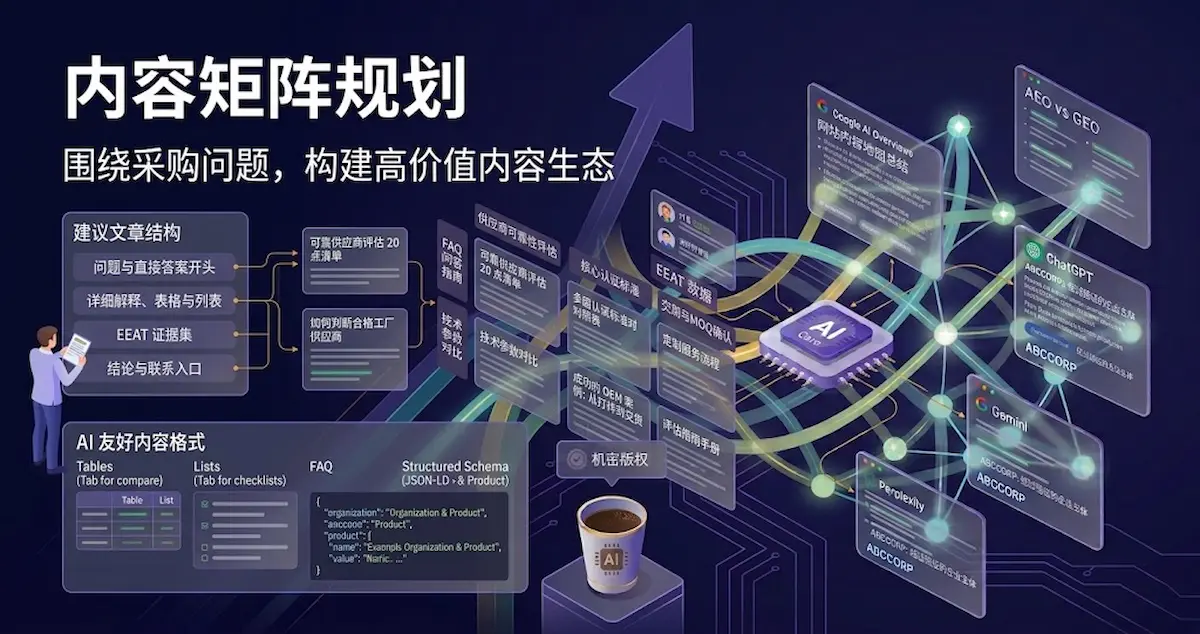
The third stage: content matrix planning
3.1 The content should not only focus on keywords, but also on procurement issues
Questions frequently asked by B-side buyers
-
What is this product? -
What are the specifications of
? -
What applications is
suitable for? -
How to choose suppliers? -
What is the MOQ? -
Does OEM/ODM support? -
How long is the delivery time? -
How to control quality? -
What is the difference between
and other materials/products? -
What should I pay attention to when exporting to a certain country?
3.2 Content Matrix Classification
Product knowledge
-
What is xxx? -
xxx Material Guide -
xxx types and applications -
How to choose xxx for your project?
Purchasing Guide
-
How to choose a reliable xxx manufacturer? -
What should buyers check before ordering xxx? -
OEM xxx Purchasing Guide -
Wholesale xxx Purchasing Guide
Comparison type
-
xxx vs xxx -
Manufacturer vs trading company -
Customized products vs standard products
Application scenario class
-
xxx is used in construction -
xxx is used for packaging -
xxx for furniture -
xxx fashion brand
Factory capability class
-
Manufacturing Process -
Quality control process -
Customization process -
Factory tour -
Testing and Inspection
Country/market category
-
xxx Nigeria suppliers -
xxx sourcing guide for South Africa -
xxx manufacturer for Middle East buyers
3.3 Suggested structure for each article
|
H1: Buyers’ real problems + core keywords
Starts with: Answer the question directly without beating around the bush
H2: Definition / Background Describe what this topic is
H2: Why do buyers care about this issue Combined with B-side decision-making scenarios
H2: Core judgment criteria Use lists, tables, and step-by-step instructions
H2: Common mistakes Tell buyers how to avoid pitfalls
H2: Suggestions for supplier selection Naturally elicit brand capabilities
H2:FAQ Answer specific questions using a question-and-answer structure
Ending: Summary + Contact/Inquiry Portal |
3.4 AI-friendly content format
Multipurpose
-
H2 / H3 -
FAQ -
Table -
Steps -
Definition section -
Comparison section -
Short conclusion paragraph -
Purchasing Suggestion Section -
Parameter description -
Application scenario description
Use less
-
A lot of nonsense -
Pure marketing slogan -
Keyword stuffing -
Long text without structure -
Only product introduction, no buyer questions
Phase 4: Page-level GEO optimization
4.1 Home
Goal: Let AI and Google quickly understand brand positioning.
Must make it clear
-
Who are you -
What products do you make -
Who do you serve -
What are your strengths -
What certifications/factory capabilities do you have -
What problems can you solve for buyers
Suggested modules
-
Hero: Brand positioning + main products -
Product Categories -
Manufacturing Capability -
Custom Process -
Quality Control -
Certifications -
Case / Client Markets -
FAQ -
Blog -
Contact CTA
4.2 Product Category Page
Goal: Let AI understand the product system and application value of this category.
Required
-
Classification definition -
Product type -
Specification parameters -
Application scenarios -
Purchasing suggestions -
OEM / ODM capabilities -
FAQ -
Related blog internal links -
Related product recommendations
4.3 Product details page
Goal: Let AI understand specific product information and help buyers decide whether to make inquiries.
Required
-
Product name -
Product description -
Parameter table -
Application scenarios -
Material/Technology -
MOQ -
Packaging method -
Delivery -
Customization capabilities -
FAQ -
Product Schema
4.4 Blog page
Goal: Let AI cite your professional answers.
Required
-
Clear H1 -
Clear problem orientation -
Direct answer section -
Forms/Steps/FAQ -
Author/Published -
Internal link to product page -
BlogPosting Schema -
FAQPage Schema
4.5 FAQ page
Goal: Centrally undertake AI question-and-answer crawling.
Classification suggestions
-
Product FAQ -
Customization FAQ -
Shipping FAQ -
Quality FAQ -
Payment FAQ -
OEM / ODM FAQ -
After-sales FAQ
The fifth stage: Schema structured data
5.1 The role of Schema
Schema is not for users to see, but for Google and AI.
Its function is to tell search engines:
-
What is this page -
Who is this brand -
What is this product -
Who posted this content -
Which official platforms is this page related to?
5.2 Page corresponding structure
Homepage
Organization Website -
Breadcrumb list
Product category page
-
Collection page -
Breadcrumb list -
FAQ page
Product details page
-
Products -
Discount -
Brand -
Breadcrumbs -
FAQ
Blog page
-
Blog article -
Article -
FAQ -
Breadcrumbs
FAQ
Page
-
FAQ page -
Breadcrumbs
About us page
-
Organization -
Local merchants or manufacturers -
Breadcrumbs
5.3 sameAs is the key
sameAs should be associated
-
LinkedIn -
Facebook -
YouTube -
Pinterest -
X -
Google Business corresponding information -
B2B platform homepage -
Crunchbase -
Wikidata -
Industry directory page
Function
-
Help AI confirm that these platforms are talking about the same brand -
Reduce brand entity confusion -
Enhance Knowledge Graph recognition probability
5.4 Schema common errors
Don't do this
-
All pages use the same Schema -
There is no Product on the product page -
Product has no brand -
Product has no offer -
The blog does not have author and datePublished -
FAQ page is only written on the front end, there is no FAQPage Schema -
Organization has no sameAs -
Official website name and social media name are inconsistent
Stage 6: Optimization of technical foundation
6.1 Cloudflare Configuration
Function
-
CDN acceleration -
DNS Management -
SSL -
Security Protection -
Global access optimization -
Improve Google crawling stability -
Improve access speed for overseas users
6.2 Technical Basic Check
Must do
-
Full site HTTPS -
sitemap.xml -
robots.txt -
canonical -
hreflang -
404 page -
301 Redirect -
Mobile terminal adaptation -
Image Compression -
WebP/AVIF -
Page caching -
Core Web Vitals Optimization
6.3 Speed Index
Suggested goals
-
LCP less than 2.5 seconds -
CLS less than 0.1 -
INP try to remain excellent -
Home page, product page, and blog page must be tested separately
6.4 Why technology affects GEO
Both AI and Google need to crawl pages reliably. If the website opens slowly, often experiences 5xx, has abnormal SSL, and has a poor mobile experience, no matter how well-written the content is, it will affect crawling, understanding, and citations.
Stage 7: Multi-platform brand signaling
7.1 Core Principles
The entire network must form the same brand entity.
7.2 Must-do Platform
B2B foreign trade station priority
-
Google Business Profile -
LinkedIn Company Page -
YouTube -
Facebook -
Pinterest -
Alibaba -
Made-in-China -
Global Sources -
Industry Directory -
Press Release Platform -
Crunchbase -
Wikidata, do it if conditions permit
7.3 Consistent across platforms
Unified content
-
Brand name -
Logo -
Official website link -
Company Profile -
Product classification -
Contact information -
Country/Region -
Main business industries -
Social media links
7.4 LinkedIn Highlights
Suggested content
-
Factory Capabilities -
Product Application -
Customer cases -
Exhibition photos -
Industry knowledge -
Quality Control -
Team and Certificate
7.5 YouTube Highlights
Suggested video content
-
Factory tour -
Manufacturing process -
Product testing -
Product comparison -
Custom process -
FAQ video -
Buyer guide video
The eighth stage: authoritative citations and external links
8.1 GEO requires external verification
AI not only looks at what you say, but also looks at whether anyone outside has mentioned you.
8.2 Recommended external link types
Priority
-
Industry media reports -
B2B Industry Directory -
Guest blog -
Exhibition page -
Customer case page -
Press release -
Supplier List -
Industry association page -
Partner page
8.3 The focus of external links is not quantity
More importantly
-
Is the source authentic? -
Is it related to the industry -
Whether the brand name appears -
Whether the official website link appears -
Can you prove that you are a supplier/manufacturer in a certain field -
Whether it can form a consistent signal with the official website, social media, and B2B platforms
Stage 9: Continuous Operation of Content
9.1 Release frequency
Suggestions
-
More than 4 in-depth blogs per month -
More than 1,500 words per article -
Each article focuses on a real problem of buyers -
Each article contains at least 3-5 FAQs -
Each article is naturally linked to the product page, category page, and Contact page
9.2 content update
Check every 3-6 months
-
Whether old articles are outdated -
Whether product parameters change -
FAQ needs to be supplemented -
Whether the internal links are complete -
Is Schema valid -
Whether the page is indexed by Google -
Whether to obtain AI citations or recommendations
9.3 Content production sequence
|
Build the core product page first ↓ Create a product category page ↓ Do FAQ page again ↓ Remake Buying Guide Blog ↓ Do the application scenario content again ↓ Re-create country/market GEO page ↓ Finally, create authoritative industry content |
Phase 10: Monitoring and Optimization
10.1 SEO data
View
-
Google Search Console inclusion volume -
Keyword exposure -
Click-through rate -
Page Rank -
sitemap crawl status -
Page index status
10.2 GEO data
Through manual testing, search and verify in ChatGPT, Perplexity, and Gemini:
-
best xxx manufacturer -
how to choose xxx supplier -
xxx sourcing guide -
xxx OEM manufacturer -
xxx wholesale supplier -
brand name + product -
brand name + manufacturer
10.3 Determine whether it is valid
Observe these signals
-
Whether AI cites your article -
Does AI mention your brand -
Whether the search volume of brand words is increasing -
Whether the product page exposure is increasing -
Does Blog bring inquiries -
Does Google crawl more frequently -
Whether external platforms begin to show brand results -
Whether Knowledge Panel or brand information enhancement appears
Final version structure
GEO Generative Engine Optimization Workflow
├── Core Goal
│ ├── Let AI identify brands
│ ├── Let AI understand products
│ ├── Let AI trust content
│ ├── Let AI quote the page
│ └── Let brands enter buyers AI survey results
│
├── 1. Brand entity construction
│ ├── Unified brand message
│ │ ├── Company name
│ │ ├── Brand name
│ │ ├── Logo
│ │ ├── Domain name
│ │ ├── Contact information
│ │ └── Company Profile
│ ├──Official website main entity source
│ │ ├── About Us
│ │ ├── Contact
│ │ ├── Products
│ │ ├── FAQ
│ │ ├── Factory
│ │ ├── Certificates
│ │ └── Blog
│ ├── Google Business Profile
│ │ ├── Enterprise Verification
│ │ ├── map entity
│ │ ├── Evaluation signal│ │ └── Brand authenticity
│ └── Knowledge Panel
│ ├── Automatically generated
│ ├── Cannot be purchased directly
│ ├── Depends on Knowledge Graph
│ └── Requires multi-source verification
│
├── 2. Website structure planning
│ ├── XMind Plan First
│ │ ├── Product Category
│ │ ├── Blog theme
│ │ ├── Buyer Questions
│ │ └── Content Matrix
│ ├── Subdirectory structure
│ │ ├── /products/
│ │ ├── /blog/
│ │ ├── /about-us/
│ │ ├── /contact-us/
│ │ ├── /faq/
│ │ ├── /en/
│ │ ├── /fr/
│ │ └── /de/
│ ├── Avoid subdomains
│ │ ├── blog.example.com
│ │ ├── en.example.com
│ │ └── Weight dispersion
│ └── Multilingual
│ ├── Subdirectory
│ ├── hreflang
│ └── Localized content
│
├── 3. Content matrix
│ ├── Product knowledge
│ ├── Buying Guide
│ ├── Product comparison
│ ├── Application scenarios
│ ├── Factory Capacity
│ ├── Quality Control
│ ├── Country Market Page
│ └── FAQ Questions and Answers
│
├── 4. Page GEO optimization
│ ├── Home
│ │ ├── Brand positioning
│ │ ├── Product Category
│ │ ├── Factory Capacity
│ │ ├── Certificate
│ │ └── FAQ
│ ├── Product category page
│ │ ├── Classification definition
│ │ ├── Product type
│ │ ├── Application scenarios
│ │ └── Procurement suggestions
│ ├── Product details page
│ │ ├── Parameters
│ │ ├── MOQ
│ │ ├── Delivery date
│ │ ├── Customization capabilities
│ │ └── FAQ
│ ├── Blog page
│ │ ├── Question-oriented title
│ │ ├── Direct answer
│ │ ├── Table
│ │ ├── Steps
│ │ └── FAQ
│ └── FAQ page
│ ├── Product issues
│ ├── Customization issues
│ ├── Logistics issues
│ ├── Quality issues
│ └── Payment issues
│
├── 5. Schema structured data
│ ├── Home
│ │ ├── Organization
│ │ ├── WebSite
│ │ └── BreadcrumbList
│ ├── Product page
│ │ ├── Product
│ │ ├── Offer
│ │ ├── Brand
│ │ └── FAQPage
│ ├── Blog page
│ │ ├── BlogPosting
│ │ ├── Article
│ │ ├── FAQPage
│ │ └── BreadcrumbList│ ├── FAQ page
│ │ └── FAQPage
│ └── sameAs
│ ├── LinkedIn
│ ├── Facebook
│ ├── YouTube
│ ├── Pinterest
│ ├── B2B Platform
│ ├── Crunchbase
│ └── Wikidata
│
├── 6. Technical basis
│ ├── Cloudflare
│ │ ├── CDN
│ │ ├── DNS
│ │ ├── SSL
│ │ └── Safety protection│ ├── Grab the basics
│ │ ├── sitemap.xml
│ │ ├── robots.txt
│ │ ├── canonical
│ │ ├── 301
│ │ └── 404
│ ├── Performance indicators
│ │ ├── LCP < 2.5s
│ │ ├── CLS < 0.1
│ │ └── Mobile terminal adaptation
│ └── Image optimization
│ ├── WebP
│ ├──Alt
│ ├── File naming
│ └── Compression
│
├── 7. Multi-platform brand signals
│ ├── Google Business
│ ├── LinkedIn
│ ├── YouTube
│ ├── Facebook
│ ├── Pinterest
│ ├── Alibaba
│ ├── Made-in-China
│ ├── Global Sources
│ ├── Industry Catalog
│ └── Press release platform
│
├── 8. Authoritative citation
│ ├── Industry media
│ ├── Press Release
│ ├── Guest Blog
│ ├── Exhibition page
│ ├── Supplier Directory
│ ├── Partner page
│ └── Customer Cases
│
├── 9. Continuous operation
│ ├── 4 in-depth blogs per month
│ ├── More than 1500 words per article
│ ├── Each article contains FAQ
│ ├── Internal links in each article layout
│ ├── Update old content every 3-6 months
│ └── Continue to add product pages and country market pages
│
└── 10. Data monitoring
├── Google Search Console
│ ├── Included
│ ├── exposure
│ ├── Click
│ └── Keywords
├── AI search test
│ ├── ChatGPT
│ ├── Perplexity
│ ├── Claude
│ └── Google Gemini
├── Brand search
├── Whether AI cites
├── Inquiry source
└── Knowledge Panel Signal
FinalStreamlined execution sequence
|
1. Unify brand entity information 2. Use XMind to plan website structure and content matrix 3. Build a subdirectory website structure 4. Improve the homepage, About, Contact, product page, and FAQ 5. Add corresponding Schema to different pages 6. Configure sameAs to associate with all official platforms 7. Configure Cloudflare, SSL, sitemap, GSC 8. Create and improve the Google Business Profile 9. Synchronize LinkedIn, YouTube, Facebook, and B2B platforms 10. Publish in-depth blog and FAQ content monthly 11. Continue to build industry external links and brand citations 12. Regularly test whether the AI recognizes and cites brands |
Summary:
GEO does not perform a certain function, nor does it rely on batches of junk content to be fed to AI. Instead, it combines website structure, content system, Schema, brand entities, multi-platform signals, technical stability and authoritative citations to allow AI to gradually know you, understand you, trust you, and recommend you in appropriate questions. AI is reconstructing the traffic entrance, and GEO will become the core for independent foreign trade stations to obtain AI recommendations in the future. Now would be a perfect time to lay out.