
Why is your independent website not generating inquiries? Have you implemented these 5 customer acquisition steps?
What to do if your independent website isn't generating inquiries? This article analyzes five key customer acquisition methods: Google SEO, overseas social media, GEO optimization, Google Ads, and email marketing. These methods will help foreign trade companies acquire targeted traffic, build customer trust, and improve the conversion rate of inquiries on their independent websites.
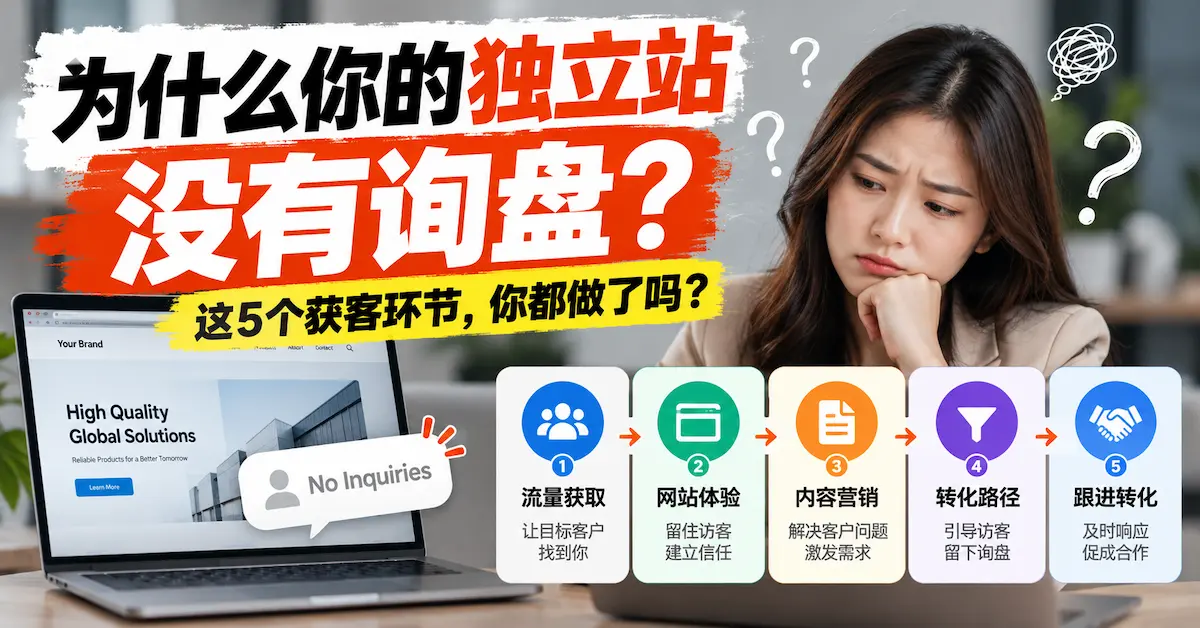
Many foreign trade business owners have had this experience: they spend tens of thousands of yuan to build an independent website, complete with product information, company introduction, and contact details. The website is online, but no customers contact them for a long time.
So I started to wonder: are independent websites even useful ?
In fact, many times it's not that independent websites are useless, but that you treat website building as the end goal.
Launching a website is just the beginning of customer acquisition in foreign trade . Why can buyers find you? Once they find you, why are they willing to learn more about you? After viewing your products, why are they willing to inquire about prices? If these questions are not answered, no matter how beautiful the website is, it will be difficult to generate effective inquiries.
To truly make your independent website a customer acquisition channel, these 5 aspects deserve a re-examination.
Google SEO: Let customers with needs find you proactively.
Google remains an important information portal for overseas buyers when searching for suppliers.
If your independent website is not optimized for your target market and product keywords, even if your product quality is good, potential customers may not be able to find you at all.
SEO is not just about publishing a few blog posts ; it requires doing several things well:
- Keyword strategy: Plan keywords around core products, application scenarios, procurement needs, and customized services.
- Product page optimization: Clearly describe product specifications, materials, applications, customization capabilities, and delivery conditions.
- Technical SEO : Checking whether pages can be crawled and indexed normally, and handling issues such as duplicate pages, website speed, and internal links.
- Content is continuously updated: We continuously publish content with practical reference value, focusing on issues that customers care about.
It's important to note that being indexed by Google does not equate to ranking , and ranking does not guarantee inquiries.
Truly valuable SEO is about getting people with purchasing needs to find relevant pages and be willing to contact you further.

Overseas social media: Don't just post products, build customer touchpoints.
Platforms such as LinkedIn, Facebook, and Instagram can help foreign trade companies reach potential buyers, showcase their product strengths, and also drive traffic to their independent websites.
However, social media marketing is not just about registering a few accounts and posting a few product pictures every day.
If you are in a B2B business, you can plan your content around the needs of your target customers, such as product applications, production processes, quality inspection, project cases, and common procurement issues.
Different platforms serve different purposes. Some platforms are suitable for finding corporate decision-makers, some are better suited for showcasing products through visual content, and others are better for building industry relationships.
Once potential customers are interested in your content, you can guide them to visit your independent website to view more complete product information, company information, and cooperation processes.
Social media is responsible for establishing touchpoints, while independent websites are responsible for receiving information and driving conversions. Only by working together can they gradually build their own customer base, rather than relying solely on traffic from a single platform.

GEO: Making AI Search More Understanding of Your Business
More and more procurement professionals are now using AI tools such as ChatGPT to understand products, compare suppliers, and find solutions.
This means that independent websites should not only be understandable to Google, but also make it easier for AI systems to understand the website content.
GEO, or Generative Engine Optimization , focuses not on simply adding a few AI keywords to a page, but on clearly expressing the company, its products, and its expertise.
Specifically, we can start from these aspects:
- Clearly define your company identity: Explain who you are, what products you produce, and which markets you serve.
- Complete product information: Provide specific parameters, application scenarios, material specifications, and answers to frequently asked questions.
- Optimize page structure: Use clear heading hierarchy, reasonable internal links, and appropriate structured data.
- Build external trust : Strive for genuine mentions of the company from credible sources such as industry media, partners, and professional platforms.
It should be clarified that GEO cannot guarantee that a company will appear in the AI's answers, nor can it guarantee that it will directly generate inquiries.
Its value lies in improving the understandability, citationability, and consistency of corporate information, allowing independent websites to better adapt to changes in the search environment.
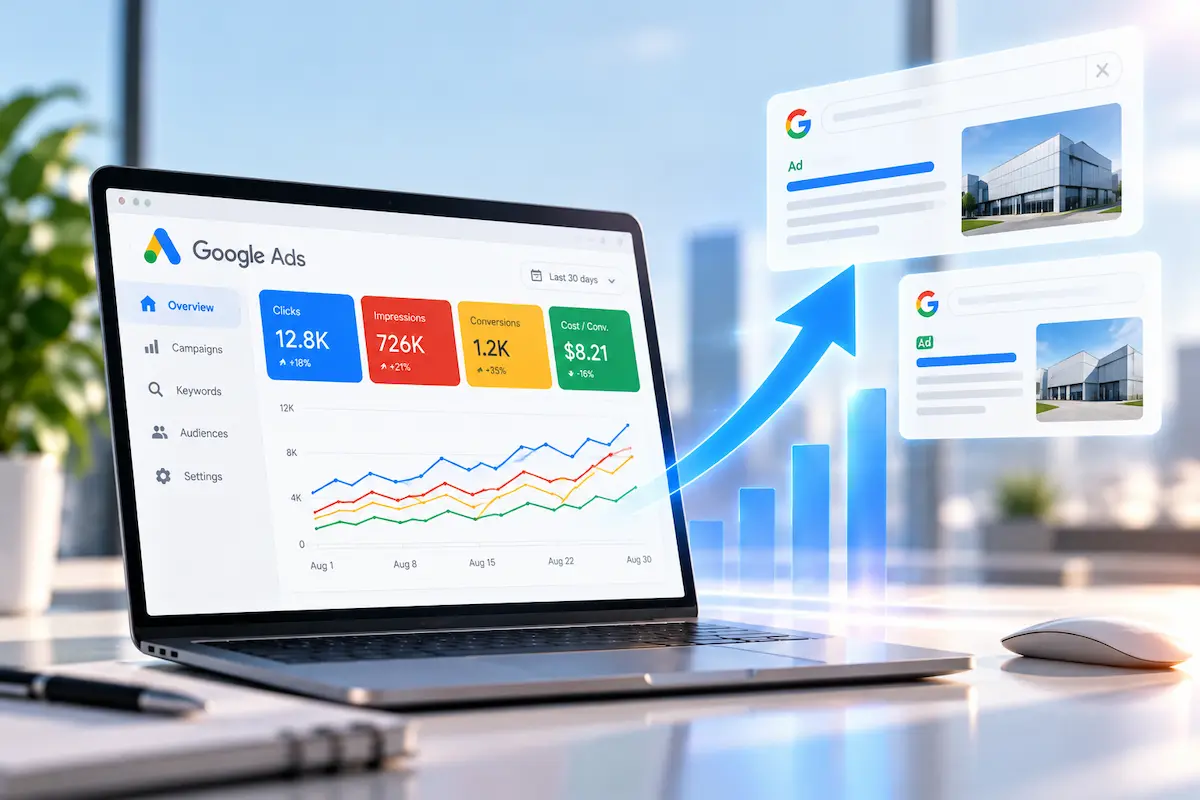
Google Ads: To get traffic faster, consider paid advertising.
SEO takes time to build up. If you want to test the demand for a product in overseas markets more quickly, Google Ads can be a supplement .
However, advertising is not the same as opening an account, topping up a budget, and then waiting for customers to come to you.
Before launching a campaign, you should at least think clearly about three questions:
- What are customers searching for? Choose keywords that are relevant to your product and purchasing needs to avoid a lot of invalid traffic.
- What will customers see when they click through? The advertising content should be consistent with the landing page , and the page should clearly present the product advantages and the inquiry entry point.
- How to assess effectiveness? Set up inquiry forms, valid phone calls, or other key conversion events to differentiate between ordinary visits and genuine customer leads.
During the campaign, it is also necessary to continuously analyze search terms, cost per click, conversion rate, and cost of effective inquiries.
If your ads bring in a lot of visits but no effective inquiries, you should check if your keywords are accurate, if your pages match customer needs, and if your contact information is easy to use.
For B2B companies, it's not enough to just look at the number of clicks; they should also focus on how many effective business opportunities are ultimately generated and whether these opportunities are worth pursuing further.

Email marketing: Proactively develop customers, instead of just waiting for traffic to come to you.
SEO, social media, and advertising primarily address customer reach, while email marketing helps businesses proactively contact target buyers and continuously follow up with potential customers.
For example, you can filter customers based on target market, industry, company size, and procurement needs, and then send targeted development emails based on their business characteristics.
Emails don't need to be long, but they should address a few key questions: who you are, what you can offer, why this product might be a good fit for the recipient, and what the recipient can do next.
If the customer doesn't respond immediately, it doesn't necessarily mean the development has failed. Instead of repeatedly sending the same sales pitch, you can provide supplementary product information, application cases, or solutions based on a reasonable follow-up schedule.
Standing independently during this process can serve as a source of trust for email marketing. After receiving the email, customers will often further explore your website to verify your company background, product capabilities, and contact information.
It is important to note that email development should comply with the privacy and anti-spam regulations applicable in the target market and provide appropriate unsubscribe options.
In conclusion: Having a website does not equate to having the ability to acquire customers.
Looking back at these five steps, you'll find that they address different problems:
SEO helps customers find you through search; social media helps you build customer touchpoints; GEO helps AI systems understand your business; Google Ads helps you proactively acquire search traffic; and email marketing helps you proactively develop and continuously follow up with customers.
These are not mutually exclusive options, nor does it mean that every company should invest in all channels simultaneously. You need to find the right combination based on your product characteristics, target market, budget, and team capabilities.
More importantly, don't just focus on traffic; also check what happens after that traffic enters the website: Is the product information complete? Can customers quickly determine if you are reliable? Is the inquiry portal clear? After receiving an inquiry, is someone following up promptly?
If your independent website is already online but you haven't received any inquiries, you might want to start by checking these questions.
Is your current independent website mainly stuck because it lacks traffic, or does it have traffic but no inquiries?