How to make GEO effective? These 9 core principles determine whether your content can be cited by AI.
GEO's 9 optimization principles: From content and citations to technology and updates, enhance the brand's chances of being understood, cited, and recommended by AI.
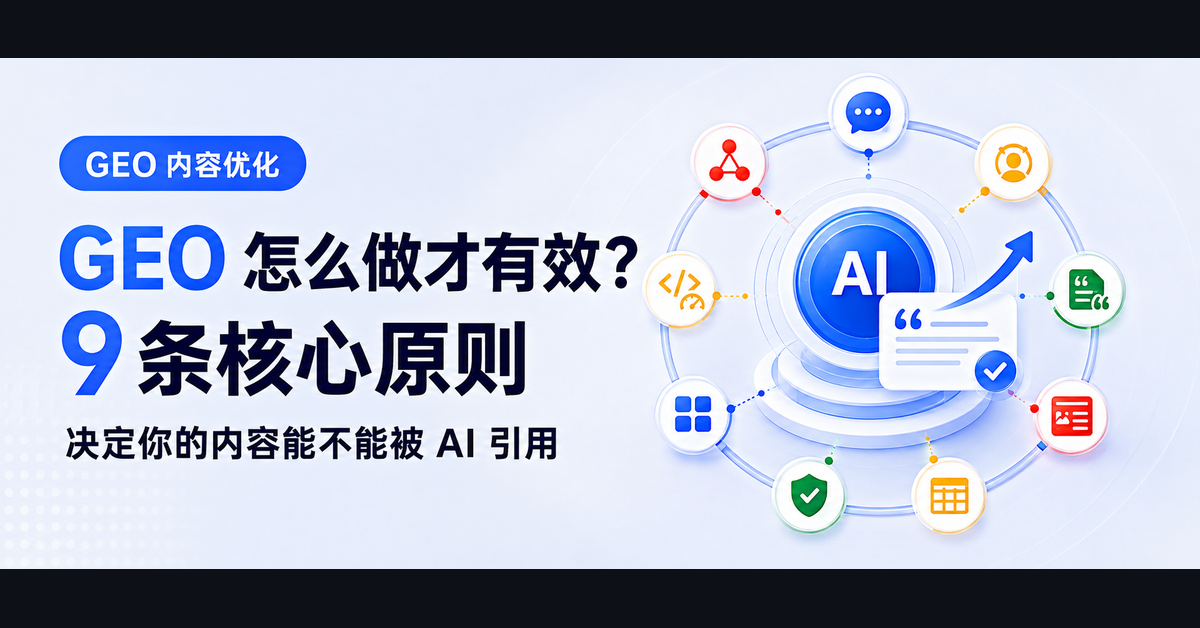
For GEO to be effective, the core is not keyword stuffing, but making content easier for AI to understand, verify, cite, and recommend. The following nine principles cover content structure, entity signals, citation sources, technological foundation, and continuous updates.
Principle 1: How to start with a direct answer?
Each article should directly answer the topic within the first 2-4 sentences, providing a clear summary and core conclusion. Large AI models typically scan pages from top to bottom, making it easier to extract the explicit answer at the beginning.
Under each question H2, immediately place a brief answer of about 30-50 words after the title, without adding links or references, and state the most important information first.
Principle 2: How to maintain the clarity of entities?
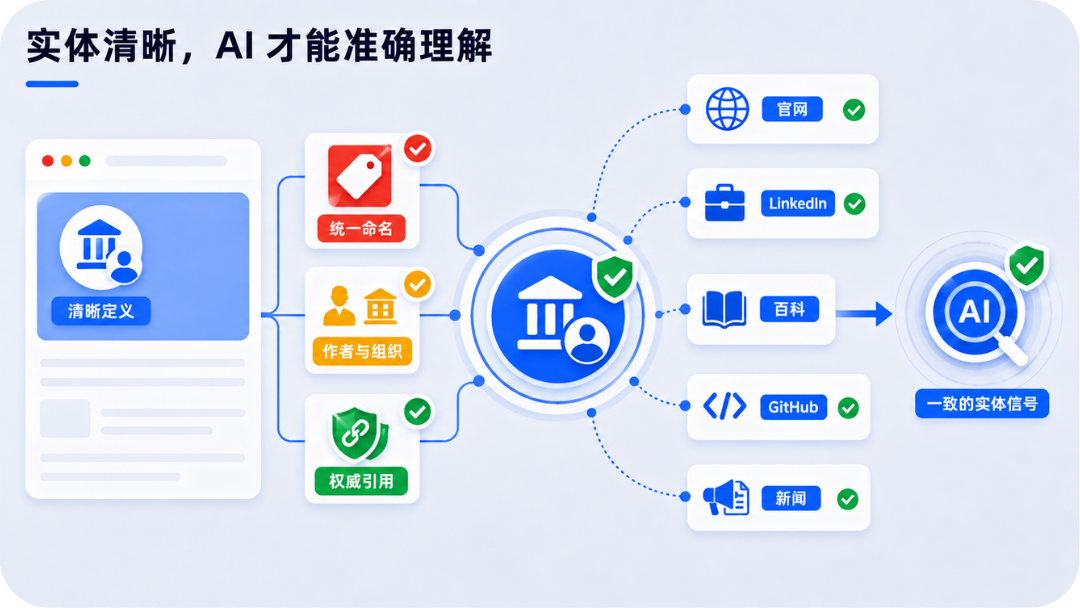
The first paragraph should clearly define the topic, subject, and conclusion using declarative sentences, and consistently use company, brand, product, and technical terminology names. Author credentials, organizational background, and authoritative references can further help the AI establish correct entity connections.
Physical branding isn't limited to the official website. Consistent naming and positioning across platforms like LinkedIn, Wikipedia, GitHub, news, YouTube, and industry communities allows a brand to build a stable profile across multiple sources.
Principle 3: How to increase citation density and source authority?
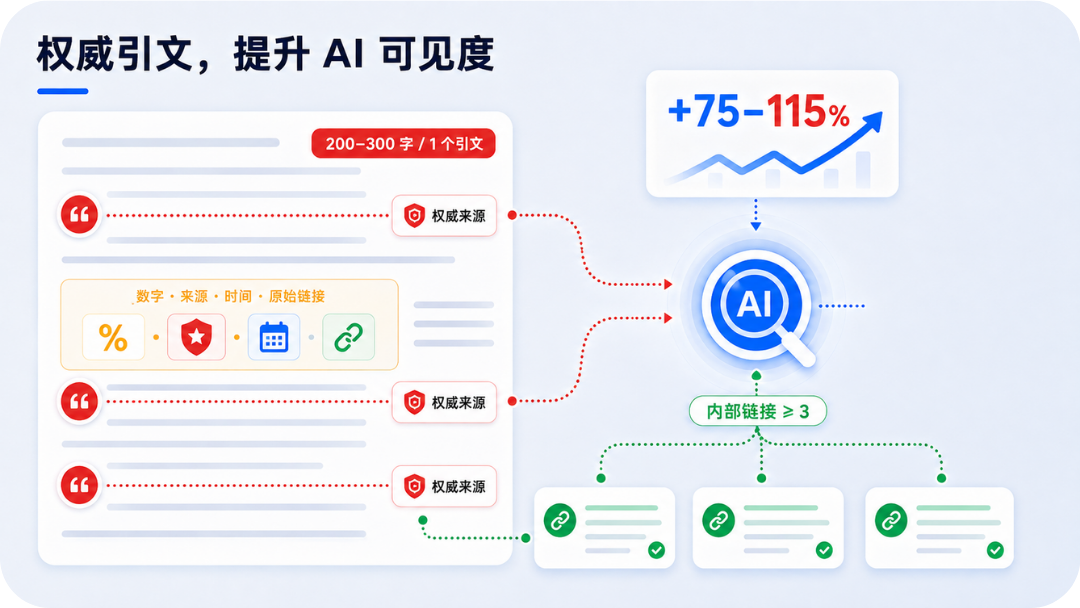
Authoritative citations can significantly enhance the credibility of content and its visibility to AI. It is recommended to include at least one authoritative source every 200-300 words, and for each fact, include specific figures, the source of the name, a time reference, and a link to the original source.
Internal links are equally important. They help AI understand the breadth and depth of a website's topics; longer articles can be planned with at least three internal links pointing to related pages.
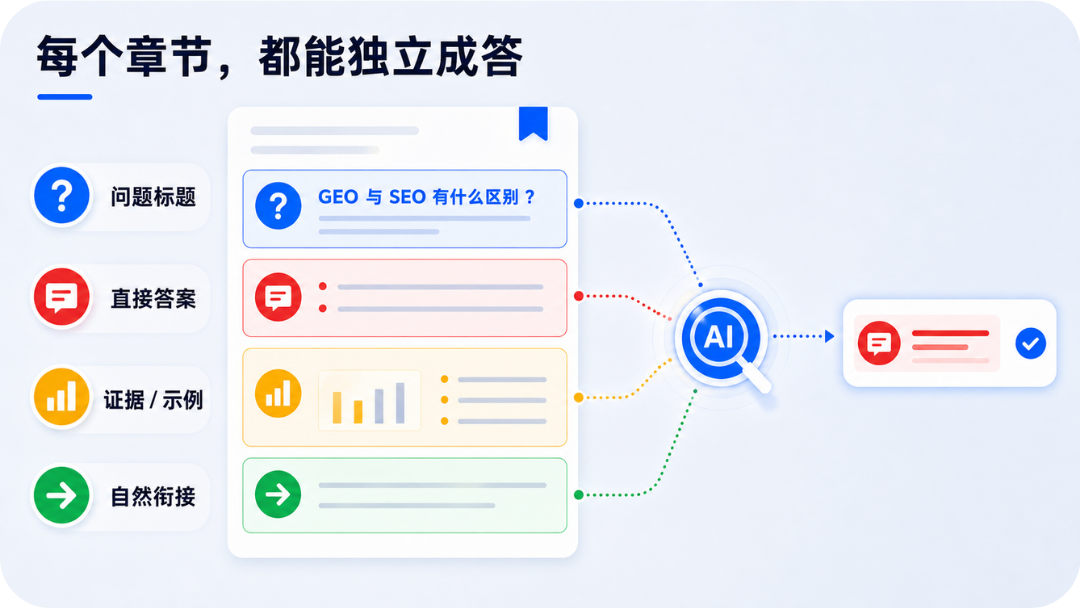
Principle 4: How can each chapter stand alone as a complete answer?
AI typically extracts information in blocks, so each section should clearly state the question and answer in the title and the first 1-2 sentences, then supplement with evidence, cases or data, and finally connect to the next section with a natural transition.
Try to rewrite H2 pages into questions that users would actually ask, such as "What is the difference between GEO and SEO?" It is easier to match search intent than abstract conceptual titles.
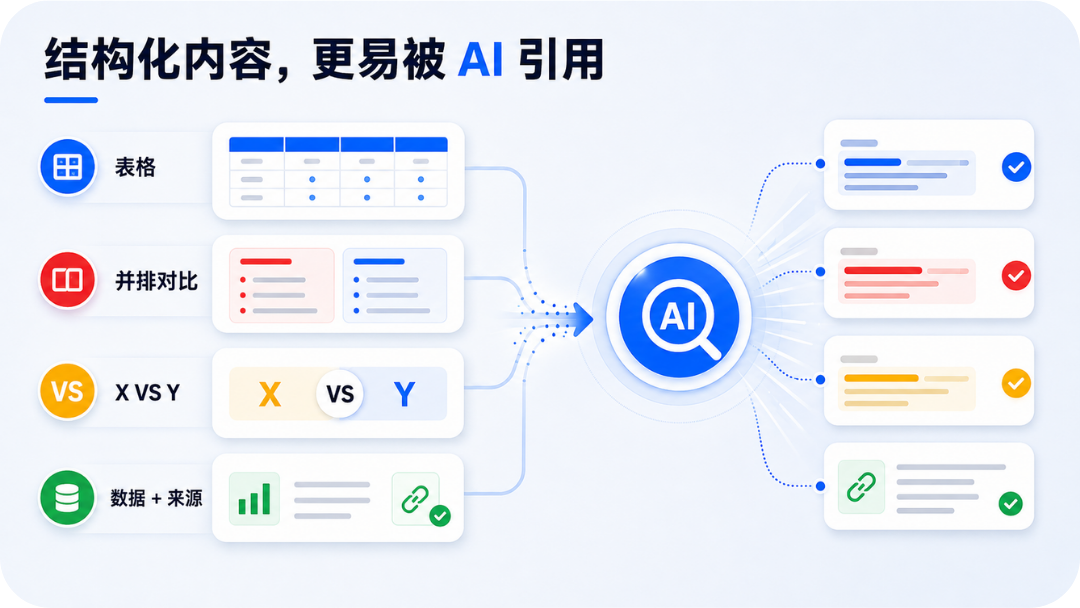
Principle 5: How to improve AI extraction efficiency with structured content?
When comparing tools, methods, or concepts, prioritize HTML tables with clear column headers, side-by-side function lists, and "X & Y" frames. Important data should be specific, verifiable, and include source links whenever possible.
Question-style titles such as "What is the best X?" and "Which is better, X or Y?" closely resemble the way users ask questions to AI, making it easier for the system to quickly match and extract answers.
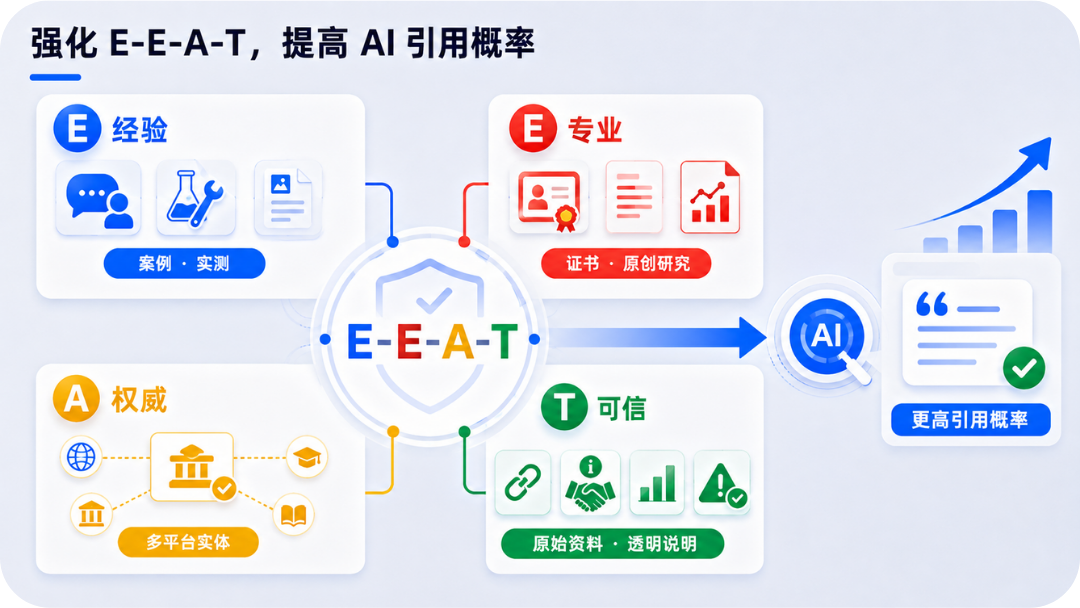
Principle 6: How to strengthen the EEAT signal?
EEAT stands for Experience, Expertise, Authority, and Credibility. Experience can be presented through first-person case studies, test records, and project debriefings; Expertise requires author credentials, original research, and relevant publications; Authority comes from consistent presence on multiple credible platforms; and Credibility relies on original data, transparent explanations, disclosure of conflicts of interest, and proactive acknowledgment of limitations.
In B2B scenarios, author information, company background, customer cases, certification qualifications, and verifiable data all influence whether AI is willing to use your content as a source of answers.
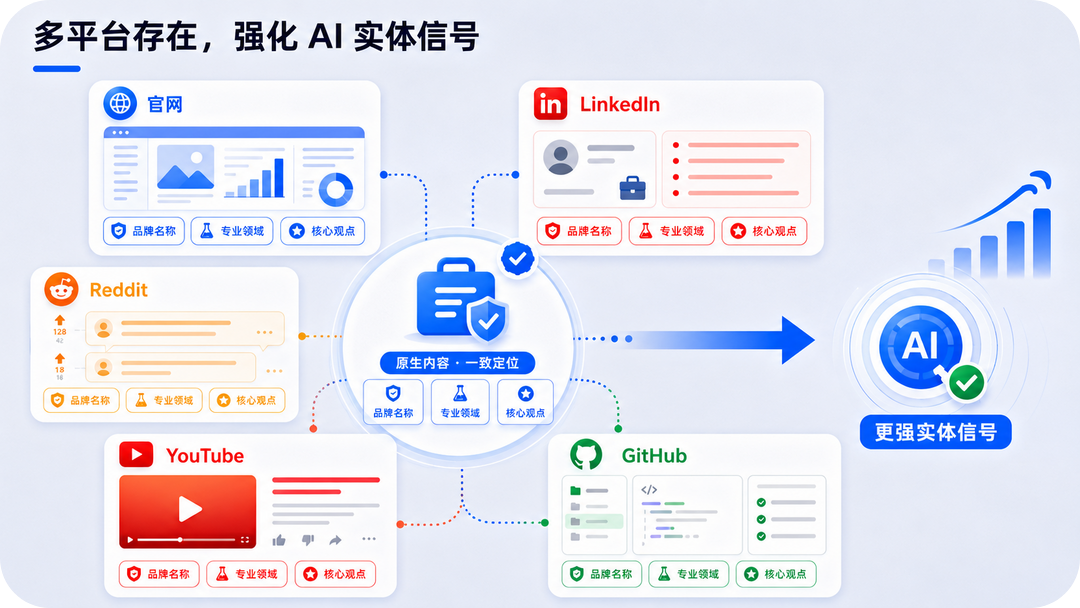
Principle 7: Why should we establish a multi-platform presence?
AI integrates multiple sources across the internet. Consistent brand names, areas of expertise, and core viewpoints across authoritative platforms such as official websites, LinkedIn, Reddit, YouTube, and GitHub create a stronger entity signal than a single website.
Multi-platform operation does not mean mechanically copying the same article, but rather creating original content for different platforms while maintaining consistency in brand positioning and factual expression.
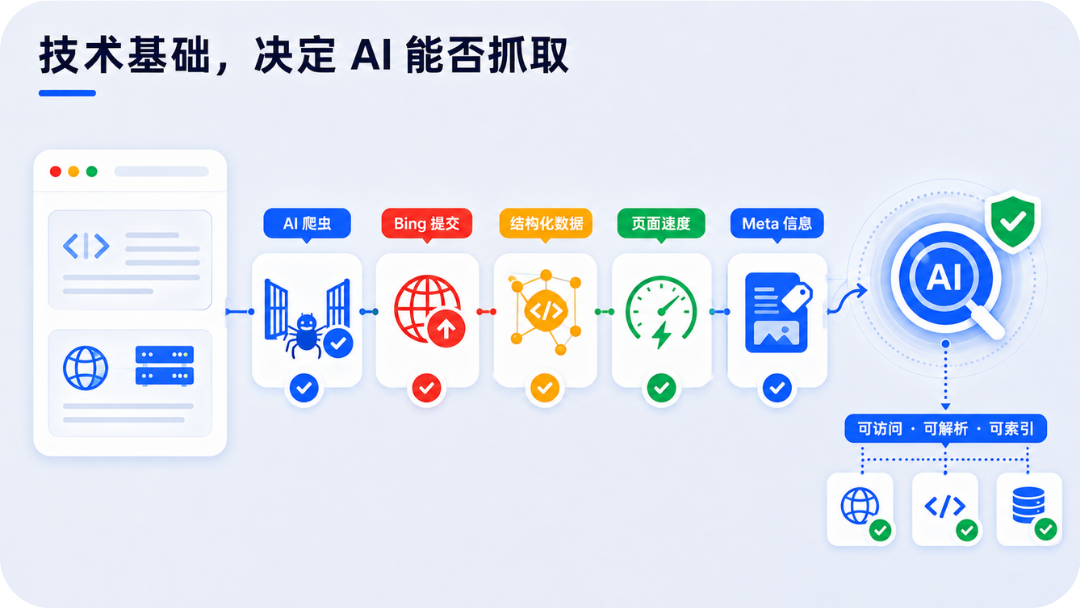
Principle 8: What technological foundations does GEO require?
Before optimizing content, ensure that the AI crawler can access and parse the website. Check robots.txt and access permissions, submit the website to Bing Webmaster Tools, deploy structured data such as Organization and Article, and continuously optimize page speed.
At the same time, improve the page title, description, canonical, shared images and other meta information so that search engines, social platforms and AI systems can quickly understand the page topic and entity relationships.
Principle 9: How to maintain AI citation priority through continuous updates?
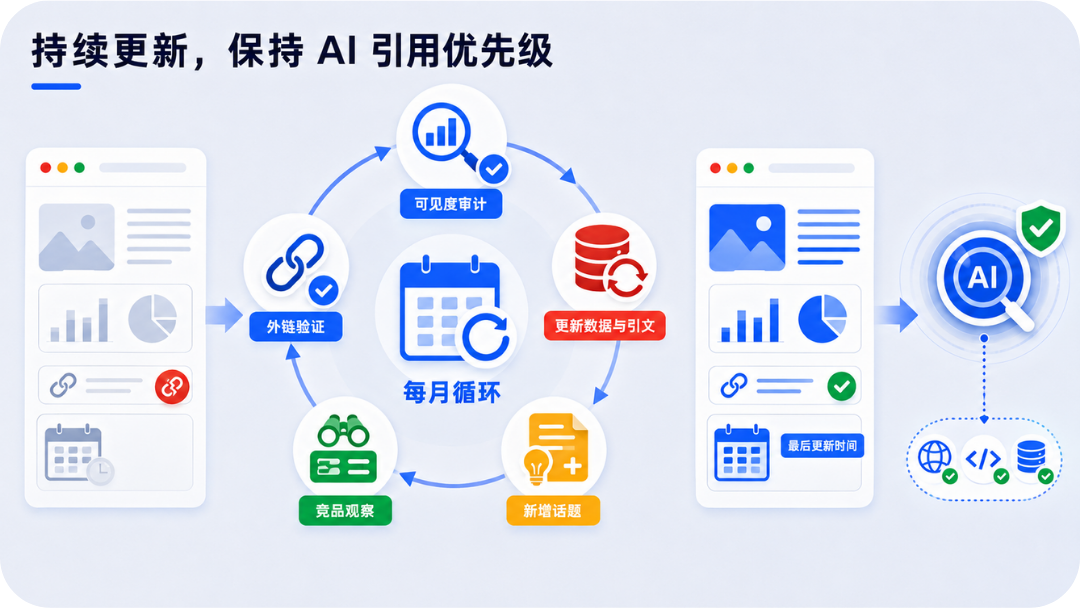
GEO is not a one-off project. We re-audit the AI visibility of target keywords monthly, update statistics and citations with the latest data, add new topics, monitor competitors, and check if all external links are still effective.
Displaying the last update time on the page and continuously correcting outdated information, broken links, and obsolete viewpoints helps keep content fresh and increase its chances of being cited by AI.