
In the GEO era, how can independent websites gain more traffic and inquiries?
The era of AI search has arrived. GEO helps independent websites increase their AI citation rate and win more accurate inquiries and overseas customers.
The way overseas buyers find suppliers is changing
In the past, independent e-commerce websites primarily relied on Google search rankings to acquire organic traffic. Businesses focused on SEO, including product keywords, content updates, internal links, and external links. Only after a page ranked high in search results could it gain clicks and potentially convert into inquiries.
Now, overseas clients have another way to find suppliers. Buyers don't necessarily have to open each webpage one by one; they can directly ask questions to ChatGPT, Gemini, or other AI platforms with online search capabilities.
They might ask which Chinese manufacturers are suitable for the project, how to identify a reliable OEM supplier, which supplier is suitable for small-batch customization, or what the difference is between Supplier A and Supplier B.
AI may search multiple public sources, compare a company's products, certifications, case studies, delivery times, and service capabilities, then organize the information into an answer and display a small number of source links.
If a brand appears in this answer, customers may already know who the company is, what products it offers, and why it's worth learning more about it even before visiting the official website. Independent websites are no longer just about Google rankings; they also need to consider whether their content can be discovered, understood, verified, and cited by AI.
1. GEO is not intended to replace SEO.
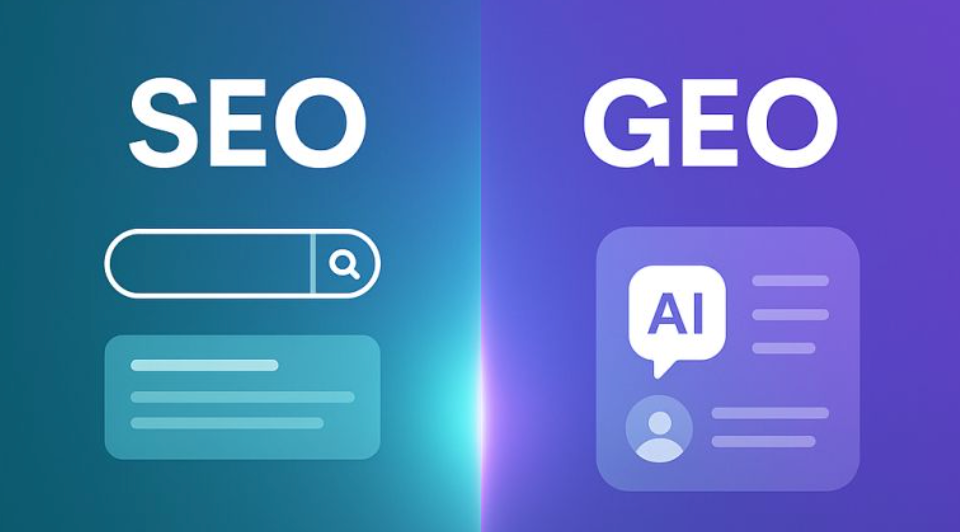
GEO stands for Generative Engine Optimization . It focuses on the visibility of website content in generative search and AI-generated answers, including whether the brand is mentioned, whether the page becomes a source of citations, and whether the content influences AI-generated answers.
SEO primarily focuses on crawling, indexing, search ranking, and organic clicks; GEO focuses on whether content can enter the AI's retrieval and answer generation process; both ultimately aim to serve real users, rather than simply catering to algorithms.
Traditional SEO remains the foundation for AI search visibility. Pages need to be crawlable and indexable, and the content must have genuine value. Generative search does not require specialized AI tagging, nor does it have a special schema that guarantees inclusion in AI answers.
Websites that have important pages not indexed, slow loading, poor mobile experience, robots.txt or noindex blocking crawling, insufficient product content, conflicting brand information, or only have marketing slogans or lack reasonable internal links will find it difficult to achieve stable results through GEO alone.
GEO is not about building a completely new website outside of SEO, but rather about further supplementing existing SEO with content expression, brand entity , and evidence of trust.
How should we understand "visibility increased by 40%"?
A GEO study published at ACM KDD 2024 found that, under its test benchmarks and specific optimization methods, the visibility of website content in generated answers can be increased by up to approximately 40%.
This figure comes from an experimental environment and does not represent that any independent website can achieve a 40% growth after completing GEO, nor should it be directly interpreted as a 40% increase in traffic or inquiries. The results may vary depending on the platform, industry, issue, language, and time.
For businesses, a more reliable approach is to build their own test issue database, recording brand mentions, reference pages, and referral traffic before and after optimization.
2. Why might GEO affect traffic to an independent website?
AI begins to participate in the first round of supplier selection.
Traditional search typically presents multiple web pages to users, who then click, read, and compare them themselves. AI search can pre-process this work: understanding purchasing requirements, searching for information from different sources, and finally providing a curated answer.
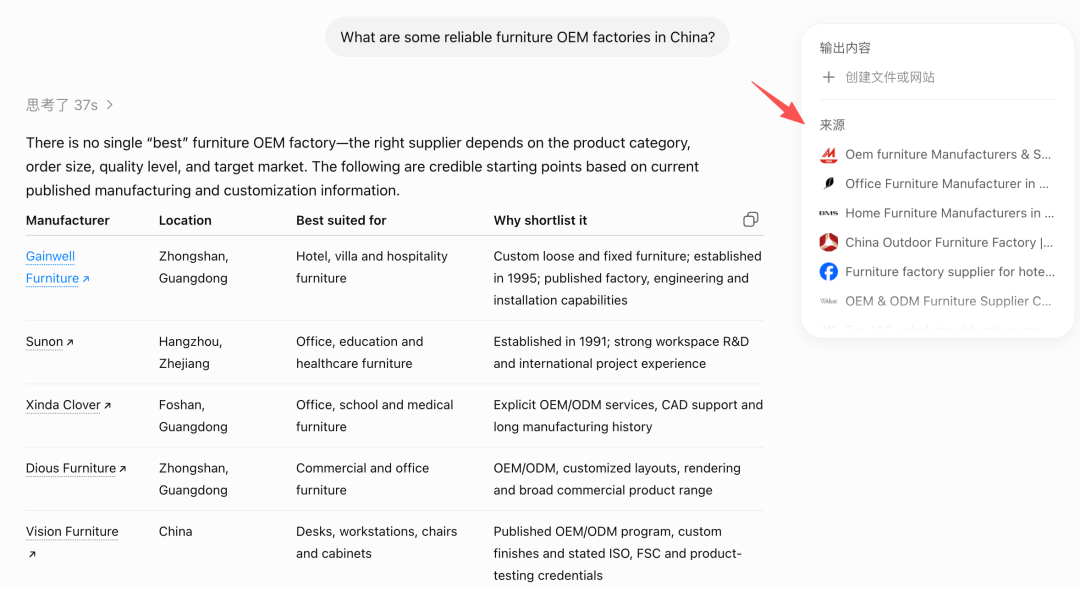
For example, when a buyer is looking for a furniture OEM factory, AI may continue to verify whether the company actually produces the relevant products, whether it can provide OEM or ODM services, materials, MOQ, delivery time, export experience, certification quality documents, and project cases.
If a website lacks this content, AI will struggle to determine whether a business is suitable for recommendation. The problem isn't necessarily that the website isn't good enough, but rather that there's insufficient publicly available information to complete the verification process.
Brands may be seen before customers visit the website.
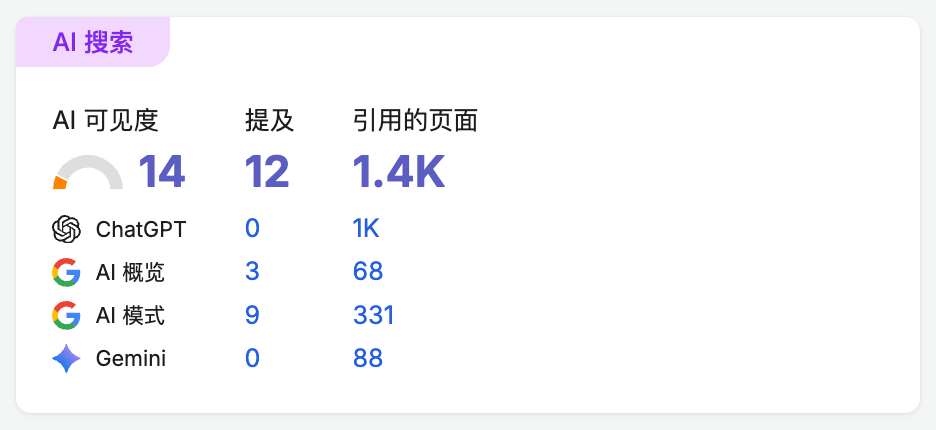
If a website's content is mentioned or cited by AI, the business may be shortlisted before a customer even clicks on the official website. Even if the user doesn't visit the page at that time, the brand name, product capabilities, and expert opinions have already received exposure.
This exposure may manifest as visits recommended by AI platforms, subsequent brand keyword searches, direct URL input, continued verification of the company on other platforms, or sales receiving inquiries such as "I saw you in the AI's response."
Not all impacts can be seen from a single link click. Therefore, the effectiveness of GEO cannot be judged solely by website traffic; it is also necessary to observe brand search, AI-driven traffic, and inquiry sources.
Detailed questions are often closer to the purchasing decision.
Searching for "furniture" and asking "Which furniture OEM factory supports low MOQ hotel projects" represent different procurement stages. The latter already includes product, supplier type, order size, and application scenario, and users are often already in the supplier comparison or project evaluation stage.
This does not mean that all AI traffic has high conversion value, but for B2B websites, a small number of visits that are highly relevant to the product and target market may be more worthwhile than a large amount of general industry traffic.
3. Why are there still no inquiries after the content is referenced by AI?
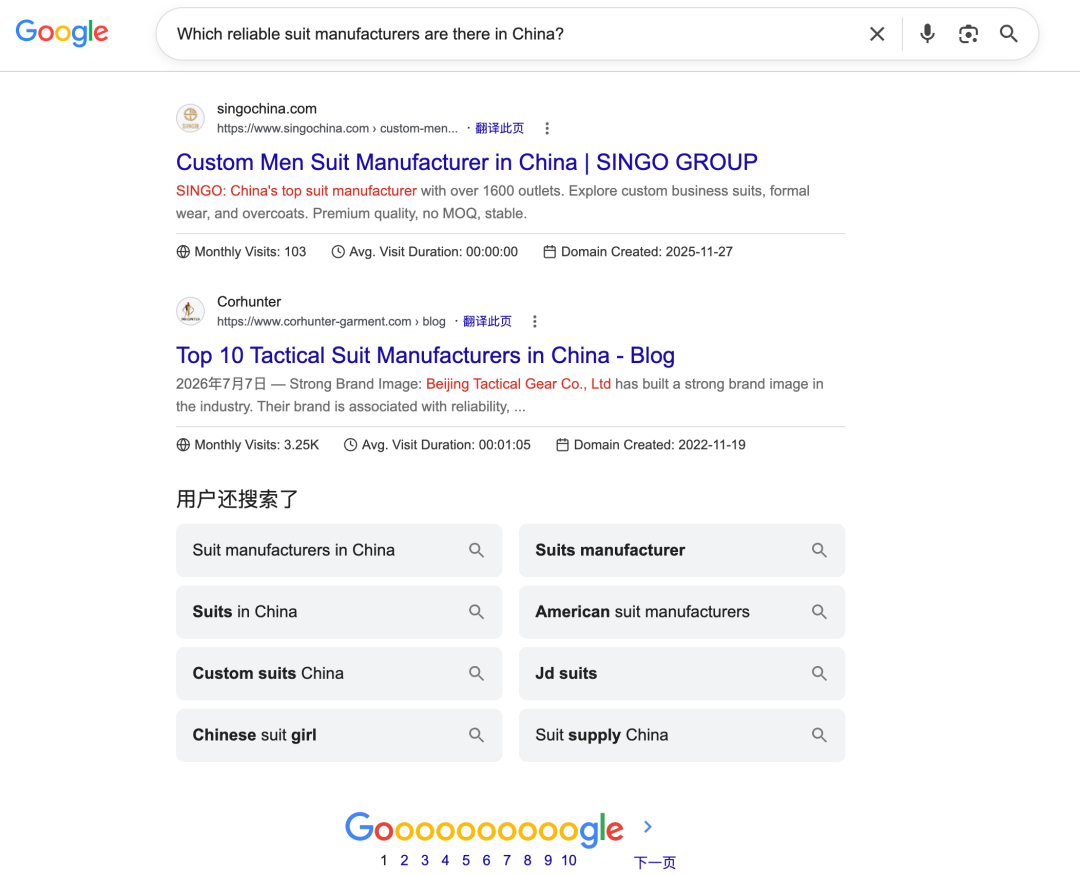
GEO's goal cannot stop at being indexed or cited by AI. AI can bring customers to a page, but it cannot perform supplier evaluations for a website.
If customers visit a referenced company's page and only see slogans like "professional manufacturer," "leading quality," and "global service," but cannot find information on MOQ, materials, delivery time, customization process, and quality control, even if they get clicks, it will be difficult for them to continue.
Content suitable for GEOs should also serve procurement decisions.
| Page content | Answering procurement questions | The role of AI understanding |
|---|---|---|
| A clear opening answer | What problem does this page solve? | Quickly identify the page theme |
| Product Specifications and Materials | Does the product meet the project requirements? | Provide specific entities and parameters |
| MOQ and Delivery Time Information | Is the order ready for execution? | Supplementary Procurement Conditions |
| OEM/ODM process | Can the company complete the customization? | Explanation service capabilities |
| Quality Control and Certification | Is the product reliable and compliant? | Provide verifiable evidence |
| Project Cases | Have you had similar experiences? | Demonstrating practical application ability |
| Author and update time | Who published the content and is it outdated? | Help determine the source |
| CTA and Contact Portal | What should the customer do next? | Shorten the inquiry path |
A clear structure is only the first step. What truly influences inquiries is whether the page can reduce uncertainty for buyers.
Do not write conditions that cannot be disclosed as fixed commitments.
MOQ, lead time, and price are often affected by materials, specifications, packaging, order quantity, and production schedules. If fixed figures cannot be provided, explain the calculation logic and influencing factors instead of leaving them blank or fabricating data to make the page appear complete.
For example, the MOQ depends on the product structure, materials, and customization options. Standard models typically support lower MOQs, while orders involving new molds, special materials, or custom packaging require separate evaluation. This statement answers the question while retaining the necessary conditions.
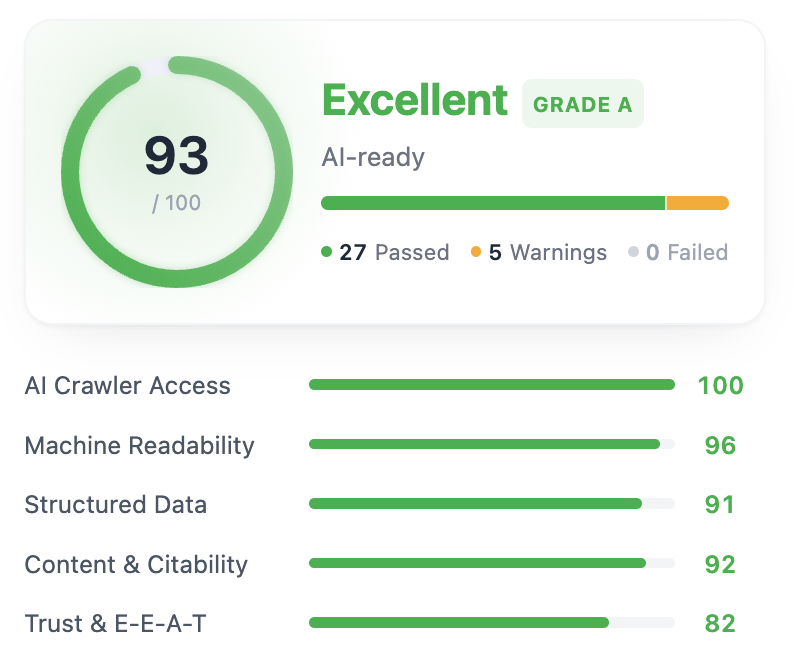
4. The GEO detection score is 93 points, why is optimization still needed?
In a third-party GEO analytics report, an independent website scored 93 points. The report indicated that the page allowed access from AI-related web crawlers and included clear heading hierarchy, Q&A, tables, structured data , and some enterprise trust information.
The report still found that the Article Schema lacked authors, the pages lacked clear attribution, some conclusions lacked sources, the relationship between authors and corporate entities was unclear, and the update time and review information were incomplete.
These issues may not prevent the page from being discovered by AI, but they may increase the difficulty of determining the source and verifying information.
Detection score is not AI citation probability
A score of 93 only means that the page meets most of the inspection rules set by the tool. It does not mean that the probability of being cited by AI is 93%, that it has been included by all platforms, that the brand is definitely on the recommended list, or that the website has completed all GEO work.
Different tools use different rules, weights, and data sources, and AI platforms do not publicly disclose the complete algorithm. Therefore, detection scores are more suitable for finding missing items and cannot be used as the final result.
EEAT cannot be accomplished simply by installing a plugin.
EEAT involves experience, professionalism, authority, and credibility; it's not a technical module that can be directly configured. What truly underpins trust are a clear corporate entity, verifiable authors, genuine factory equipment, valid certification reports, concrete case studies, quality processes, after-sales responsibility, and consistent information from third parties.
A schema can help describe this information, but it cannot replace the information itself.
5. How should an independent foreign trade website conduct GEO (Government-Oriented Operations)?
Check AI and search crawler access permissions
First, check if important pages are accessible and whether they are blocked by robots.txt, noindex, login permissions, or JavaScript rendering issues. If you want your content to appear in ChatGPT Search, you should also check if your website is incorrectly blocking OAI-SearchBot. Allowing crawling is only a prerequisite for inclusion in the search scope; it does not guarantee that your content will be cited.
Unified brand and corporate entity information
The brand name, company name, location, main products, service markets, contact information, official website, and social media accounts on the homepage, About Us, Contact, social media, and third-party platforms should be as consistent as possible. The more conflicting the information, the harder it is for search systems and AI to confirm whether they refer to the same company.
Include your purchasing experience in the content
The most valuable content on an independent foreign trade website is usually not a general introduction to the industry, but rather answers real procurement questions such as how to choose specifications, which materials are suitable for different scenarios, what affects MOQ, what information is needed for sampling, process differences, supplier capability assessment, target market documents, and delivery risks.
Increase verifiable evidence
Key conclusions on the page should be supported by facts as much as possible. This can be achieved using product specifications, test results, certification documents, factory equipment, production processes, project case studies, official standards, authoritative sources, and publicly available customer application information. Avoid adding data, research, or customer names arbitrarily for the sake of authority.
Establish genuine third-party verification
Industry directories, exhibition websites, association materials, customer reviews, media reports, and partner pages can supplement external verification. The focus here is not on the quantity of backlinks, but on the authenticity, relevance, and verifiability of the information. Bulk purchasing of brand mentions, fabricated reports, or false reviews is not a reliable GEO strategy.
Connect the referral traffic to the inquiry path
After obtaining an AI reference, the page should clearly indicate the next steps, such as obtaining a product catalog, requesting a specification sheet, submitting project requirements, requesting samples, contacting engineers, obtaining a quote, or viewing relevant case studies. CTAs do not need to appear frequently, but should be consistent with the page theme and the procurement stage.
Frequently Asked Questions
Will GEO replace SEO?
No. Page crawling, indexing, content quality, website structure, and search authority remain crucial foundations for generative search visibility. GEO is more like adding AI retrieval, brand entities, and referencing scenarios to SEO.
Can adding a schema allow it to be referenced by AI?
No. Structured data can help search systems understand pages and may support some rich media results, but there is no special schema that guarantees AI referencing it.
Do all AI platforms read websites?
No. Different AI products have different networking, retrieval, and citation mechanisms, and their functionality may be affected by region, account, model, and usage scenario. GEO is primarily aimed at AI search scenarios that can retrieve publicly available web pages or display sources.
How long after GEO optimization can you see the results?
There is no fixed timeframe. Website crawling status, content quality, brand foundation, question relevance, target language, and AI platform updates all affect the results. It's more suitable to conduct continuous testing with a fixed set of questions rather than committing to a specific period.
How to measure the effectiveness of GEO?
It can track the frequency of brand mentions in fixed questions, the pages and sources of references, AI-driven traffic, changes in brand keyword searches, AI traffic landing pages, and the quantity and quality of AI-sourced inquiries. During testing, the questions, language, region, platform, and recording period should be fixed.
Is there a chance that small export-oriented factories can be used by AI?
There is an opportunity. Specific technical knowledge within a niche industry, real-world parameters, clear customization options, and verifiable case studies can all help smaller businesses gain visibility in specific procurement issues.
Conclusion: Check three pages first.
For independent e-commerce websites focusing on GEO (Generative Advice over Occupation), it's advisable to start with the homepage, core product pages, and About Us section. Check if the AI can understand who the company is, whether the product and service scope is clearly defined, whether the page answers genuine purchasing questions, whether key conclusions are verifiable, and whether customers understand what to do next after viewing the content.
If these five questions haven't been answered clearly, don't rush to pursue a high score. Compiling accurate information from the website is a more worthwhile first step.