
What is SEO – Search Engine Optimization?
SEO is a long-term website growth effort that centers on understanding user search intent and improving website visibility through technical optimization, high-quality content, brand building, and data analysis. With the development of AI search, enterprises should also pay attention to GEO so that brands can continue to gain exposure, trust and business conversion in traditional search and AI search.
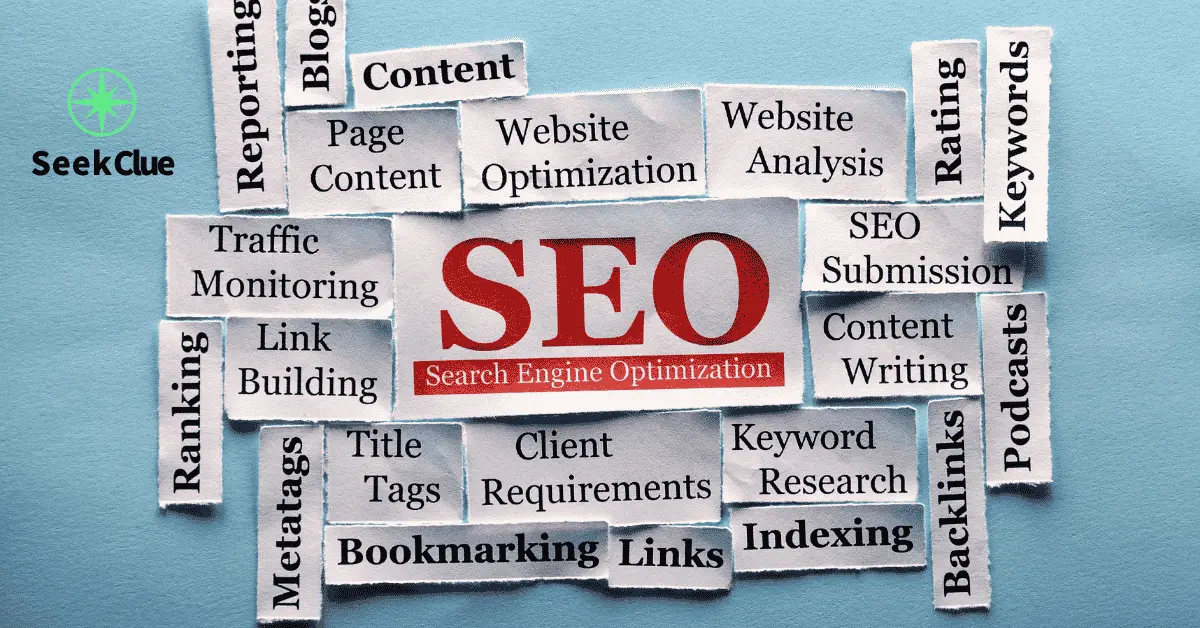
What is SEO? Why is it more important now than ever?
When potential customers are looking for products, services, or solutions on search engines such as Google, Microsoft Bing, etc., they often select a few of the most relevant websites to learn about from the search results. SEO (Search Engine Optimization) is about optimizing website content, structure and user experience to make your website easier to understand by search engines and gain higher visibility in relevant search results.
Simply put, SEO can help your website have a better chance of being discovered when users search for:
- Products you sell
- Services you provide
- Expertise in your industry
- Solutions to the problems users are looking for
The higher your website's ranking and visibility in search results, the greater your chances of generating organic visits, brand exposure, and potential customers.
But today’s SEO is no longer just about “keywords” and “Google rankings”.
As Internet technology, search algorithms and user behavior continue to change, the way people obtain information has also changed significantly. Users may ask questions through mobile phones, voice assistants or even AI tools; search engines are increasingly inclined to directly understand users' search intentions and generate summaries, answers and recommendations through AI.
This means that businesses not only need to consider how to get their sites found by search engines, but also:
- How to let search engines accurately understand the content of the website?
- How to match the user’s true search intent?
- How do you build professionalism and credibility through high-quality content?
- How do you get your website visible in both traditional search results and AI search environments?
- How to further convert the traffic brought by search into inquiries, sales leads and customers?
Therefore, modern SEO is closer to a complete website growth system, rather than just a technical optimization work.
In this introductory guide, we will start with the basic concepts of SEO and gradually introduce keyword research, website structure, page optimization, content construction, technical SEO, external links, and new optimization methods in the AI search environment to help you establish a complete understanding of SEO and provide a clear direction for subsequent in-depth learning and practice.
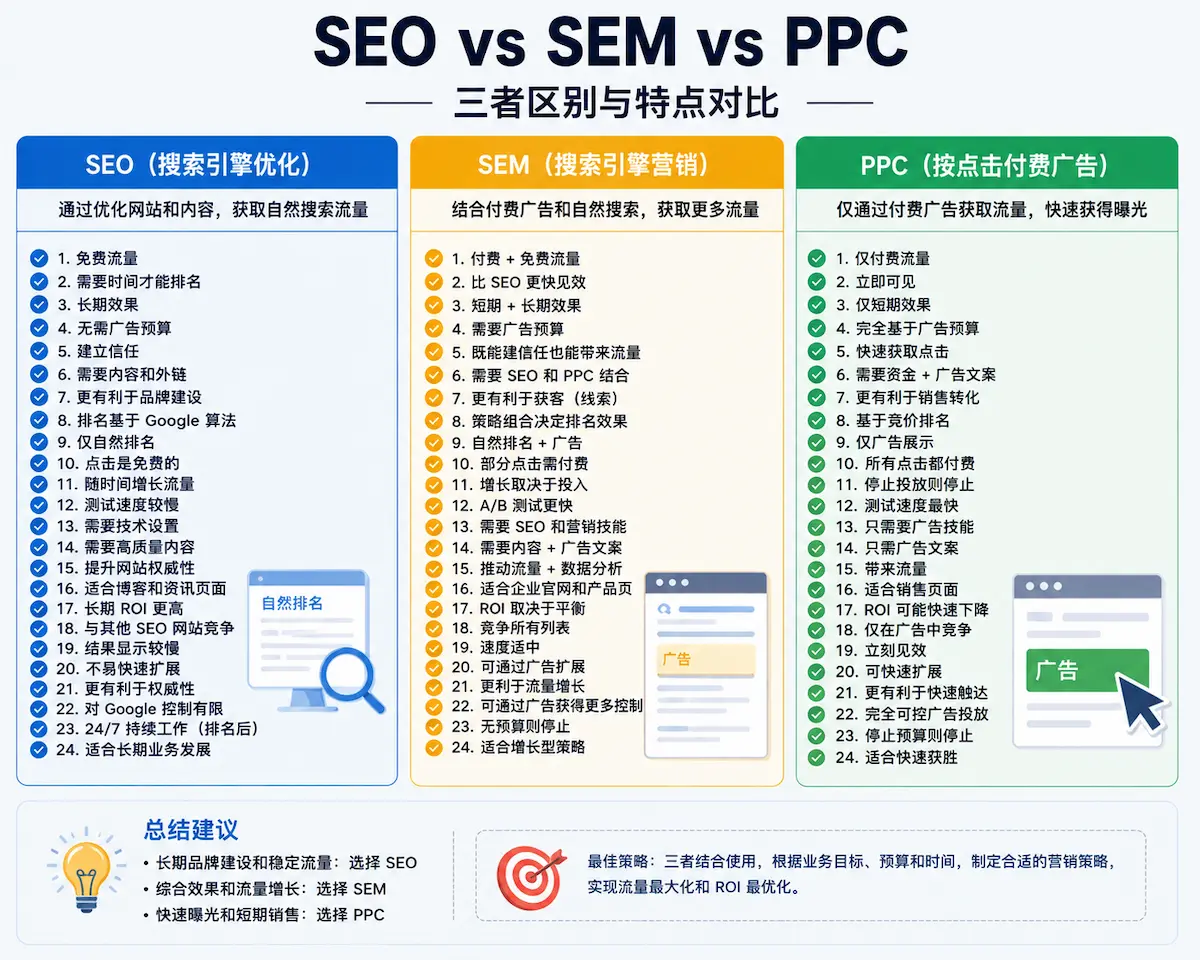
How is SEO different from SEM and PPC?
In search marketing, SEO, SEM, and PPC are three common terms that you'll often encounter in resources like Search Engine Land and hear them discussed in the broader search marketing community. Understanding these terms and knowing how to distinguish them is key to optimizing your search marketing strategy.
SEO and SEM
- SEM (search engine marketing) is a broader term that encompasses all search engine-related marketing activities. It includes SEO (search engine optimization) and PPC (pay-per-click advertising). Simply put, SEM is the general term for obtaining traffic through search engines.
- SEO mainly refers to obtaining traffic through natural search results and does not involve direct advertising costs. By optimizing the content and technical structure of a website, SEO aims to improve a page’s ranking in search engines.
- PPC is a way to get traffic through paid search results. Advertisers bid for keywords or phrases, and when users search for those keywords, ads appear at the top or bottom of the search results page. The advertiser pays a fee each time an ad is clicked.
Technically, there is no essential difference between SEO and SEM, as SEO is a part of SEM. SEM includes organic search (SEO) and paid search (PPC). A more specific definition is as follows:
- SEO: Get clicks from organic search results.
- SEM: Get clicks from organic and paid search results.
- PPC: Get clicks from paid search results.
Think of SEM as a coin, with SEO being one side and PPC being the other.
SEO vs. PPC
PPC stands for Pay-Per-Click and is a digital marketing strategy in which advertisers pay a fee each time someone clicks on their ad. Advertisers bid for the keywords or phrases they want their ads to appear on, and when users search for those terms, the ads appear at the top or bottom of search engine results. PPC is a quick way to get traffic and is often used to get immediate results.
In contrast, SEO is a long-term process. While SEO implementation also takes time and cost, once good rankings are achieved, traffic is obtained through organic search results without having to pay per click. Importantly, while there is no direct charge for SEO clicks, the process of optimizing your website and pages requires investment, so organic search traffic is not completely free.
The differences and complementarities between SEO and PPC
Sometimes people discuss whether SEO or PPC is more valuable or has a higher return on investment. However, SEO and PPC are actually complementary digital marketing channels, and ideally, both should be used simultaneously if budget allows.
- PPC can bring immediate visible search traffic, especially if you want to promote an event or new product in a short period of time.
- SEO is a long-term strategy to gradually accumulate traffic. Once the website is optimized in place, it may continue to bring free (natural) traffic.
So, using the two together ensures your search marketing strategy is both immediate and delivers long-term results.
Terminology used in the industry
In most industries, the terms SEM and PPC are often used interchangeably. But on professional platforms like Search Engine Land, "SEM" is often used to cover the entirety of search engine marketing, including SEO (organic search) and PPC (paid search).
By understanding the relationship between SEO, SEM, and PPC, you can more clearly develop and optimize your search marketing strategy to maximize your ROI and website traffic.
Why is SEO important?
As an important marketing channel, SEO (search engine optimization) is becoming increasingly important around the world.
Organic search dominance
According to a 2019 BrightEdge study, organic search accounts for 53% of all website traffic, making it one of the key sources of traffic for businesses. Every day, more than 8.5 billion searches occur globally through Google, which dominates 91% of the global search engine market. With the continuous popularity of the Internet, the market size of SEO is also expected to grow significantly. It is expected that by 2028, the scale of the global SEO industry will reach 122.11 billion US dollars.
The Broad Impact of SEO
SEO can deliver real business returns for brands, businesses and organizations of all sizes. The reason is that search behavior has become second nature to Internet users around the world, and users rely on search engines to find the information they need, whether through typing, voice, or image queries. With the number of indexed web pages worldwide exceeding 4.3 billion pages, SEO not only helps brands increase their exposure, but also helps users quickly obtain information in the vast Internet ecosystem.
Whenever a user wants to go somewhere, complete a task, find information, or purchase a product/service, their digital journey often begins with a search. This makes search a critical link for brands to reach potential customers.
Diversified trends in search
Although traditional search engines such as Google occupy a large share of the search market, in recent years, search behavior has gradually dispersed to other platforms. Users are no longer limited to making queries on traditional search engines, but are turning their attention to social media platforms and large e-commerce websites.
For example:
- Amazon: Last year, 56% of U.S. online shoppers first began their product search on Amazon.
- Google: While Google remains the dominant search engine, only 46% of shoppers begin their search with a traditional search engine like Google.
- Walmart: 37% of consumers choose to look for products on the Walmart platform.
- YouTube: With the growing popularity of video content, 25% of users search on YouTube, especially product reviews and tutorial videos.
- Facebook and Instagram: 20% and 19% each conduct searches through these social platforms, demonstrating the growing importance of social media in product discovery.
- TikTok: As an emerging search platform, 19% of users also search for product information on TikTok.
The role of SEO in multi-platform search
This trend shows that SEO is no longer limited to optimizing rankings on traditional search engines, but also needs to expand to other search scenarios. Businesses not only need to optimize content in search engines such as Google, but also pay attention to search optimization on Amazon, YouTube, TikTok and other platforms. On these platforms, optimization of product descriptions, video content, and social interactions has also become crucial.
The importance of social platforms in search has grown significantly compared to previous years, especially TikTok. This trend is especially reflected in the behavioral changes among Generation Z, especially female users. According to a 2023 study,51%of Gen Z women prefer to conduct product or information searches on TikTok rather than relying on other traditional online sources of information. TikTok has become one of the popular platforms for “how to do X” type searches.
Trillions of searches and the importance of search
Trillions of searches are conducted around the world every year, and search has become one of the main sources of website traffic. Whether users are searching for your brand or business on Google, Amazon, TikTok, or another platform, you need to make sure your content is “search engine friendly.” Optimizing search results and standing out in a competitive market can have a direct positive impact on a business's performance and bottom line.
Intensified SERP competition
SEO has become even more important because the SERP (search engine results page) has become increasingly competitive and filled with search features and PPC ads. The various features included in the SERP, such as AI Overview, Knowledge Panel, Featured Snippets, Map, Image, Video, News Headlines and the People Also Asked module, mean that businesses not only need to optimize for organic search results but also focus on leveraging these SERP features.
SEO Sustainability
Another significant advantage of SEO, unlike other marketing channels, is its sustainability. Traffic disappears when a paid advertising campaign ends, and social media traffic, while occasionally providing instant results, is often unreliable in the long term. In contrast, good SEO efforts can continue to drive traffic and conversions over the long term because the effects of organic search are cumulative and long-lasting.
SEO is the foundation of overall marketing
SEO is also the cornerstone of overall marketing strategy. Once you understand your users' needs, you can apply these insights to a variety of aspects, including paid and organic marketing campaigns, website content optimization, social media account operations, and more. Traffic generated through organic search not only helps you achieve key business goals like conversions, visits, and sales, but it also builds trust among your users. Websites that rank highly are generally seen as more authoritative and trustworthy, which are exactly the elements that search engines like Google look to reward through their algorithms and ranking systems.
Types and Specializations of SEO
Think of SEO like a sports team. To win, you need both a strong offense and a solid defense, while also attracting and maintaining your audience's attention. The different areas of SEO are like the different roles on a football team:
- Technical Optimization: Defensively ensuring that the architectural and technical aspects of the site are appropriate.
- Content Optimization: is about offense, creating content that appeals to users and is understood by search engines.
- Off-site optimization: It is a way to attract and maintain loyal fans and increase the authority and credibility of the website through external brand building.
1. Technical SEO
Technical SEO aims to optimize the technical elements of a website to improve its performance in search engines. Key technical elements include:
- Website architecture: Ensure that the website can be effectively crawled and indexed by search engines. Clear URL structure, easy-to-navigate internal links, and effective display of text, images, videos and other content are the basis for technical optimization.
- User experience: Including page load speed, mobile friendliness, HTTPS security protocol, and core network metrics. Improving the user experience is not only friendly to search engines, but also allows for higher user retention rates.
- Structured data: By adding structured data code, such as schema markup, you can help search engines better understand the content of your web pages and display them more prominently in search results.
- Website security: To ensure the security and stability of the website, good web hosting services and content management systems (CMS) are the core of technical optimization.
2. Content optimization (on-page SEO)
Content Optimization aims to optimize the content on your website for both users and search engines. The key here is to create high-quality content that meets user needs while ensuring that this content meets the technical standards of search engines:
- User Optimization: Make sure your content is optimized for your audience, uses appropriate keywords, is unique, has no grammatical errors, and has accurate information. You also need to pay attention to the readability of the content and ensure that the article structure is clear.
- Search Engine Optimization: For search engines, elements such as title tags, meta descriptions, headings (H1-H6), and image alt text must be optimized. Make sure search engines can easily understand the topic of your content and rank it effectively.
- Generative Engine Optimization (GEO): This emerging field focuses on optimizing content to be equally visible in AI-driven search engines (e.g. ChatGPT, Microsoft Copilot).
3. Brand and authority building (off-site SEO)
Off-site SEO involves branding and link building outside the website. While businesses cannot fully control these factors, they are critical in improving search rankings:
- Link Building: Obtaining high-quality backlinks from authoritative and relevant websites can significantly improve your rankings. The emphasis is on the quality of links rather than the quantity.
- Brand Building and Marketing: Enhance brand authority and visibility through the creation and promotion of brand assets.
- PR & Content Marketing: Increase your brand’s visibility and gain more links by guest blogging, publishing e-books, participating in podcasts, and more.
- Social media optimization: Enhance the brand’s influence on social platforms by optimizing social media accounts and sharing relevant content.
- Comment management: Obtain and manage ratings and reviews of websites or brands to enhance the brand’s reputation and credibility.
SEO Professional Area
SEO also has a number of subdivided areas of expertise, each with its own unique strategies and challenges:
- Ecommerce SEO: Focuses on optimizing your online store’s product pages, category pages, product images, reviews, etc. to increase traffic and conversions.
- Enterprise SEO: For larger websites with lots of pages or multiple brands. Need to handle complex SEO improvement processes and coordinate multiple stakeholders.
- International SEO: Optimize multi-language and multi-regional websites to ensure that the website performs well in global search engines such as Baidu and Naver.
- Local SEO: Improve your site's visibility in local searches by optimizing Google My Business, capturing reviews, managing local directories, and more.
- News SEO: News websites need to ensure that their content is quickly indexed by search engines and appears in search features designed specifically for news, such as Google News and Trending Stories.
How does SEO work?
Core Components of SEO
To understand SEO, it must be analyzed from many aspects. SEO is actually achieved through a combination of the following aspects:
- People: The team or individuals who execute and manage SEO strategy, tactics, and day-to-day work.
- Process: The steps and actions performed to increase productivity.
- Technology: The platforms and tools that SEO relies on.
- Activity: The result or output of SEO.
SEO success relies on several key factors. Here are six key areas in which SEO works.
1. Understand how search engines work
If you want people to find your business through search, you first need to understand how search engines work and provide the necessary signals to ensure your visibility in search results. For traditional search engines like Google, the SEO optimization process includes the following four main stages:
- Crawling: Search engines use crawlers (spiders) to discover web pages through links and sitemaps.
- Rendering: Search engines use HTML, JavaScript, and CSS to generate the appearance of a page.
- Indexing: Search engines analyze web page content and metadata and add it to a database (but not all web pages are indexed).
- Ranking: Complex algorithms use multiple signals to determine a page's relevance and quality in order to display it for search queries.
Search optimization requirements vary between platforms; for example, optimizing on YouTube and Amazon will be significantly different than optimizing for Google Search. The introduction of machine learning has made search engines more complex, making it difficult to pinpoint which factor is responsible for changes in rankings.
2. Research
SEO research is key to improving performance. Here are some of the main forms of SEO research:
- Audience Research: Understand who your target audience is and what pain points and problems they face.
- Keyword Research: Identify valuable search terms and integrate them into your pages by analyzing the keywords users search for.
- Competitor Research: Analyze your competitors’ strengths, weaknesses, and content they publish.
- Website Research: Uncover opportunities and issues in your website through technical SEO, content and link analysis.
- SERP Analysis: Create content that matches user needs for higher visibility by analyzing search intent.
3. Planning
An SEO strategy is a roadmap to long-term success. You need to set clear goals and develop a plan to achieve them. A good SEO strategy usually includes the following:
-
Set clear goals (such as OKRs or SMART goals).
-
Define KPIs and metrics to measure success.
-
Develop a content creation and optimization plan.
-
Coordinate communications with key stakeholders.
-
Implement SEO improvements using the right tools and techniques.
-
Determine budget and resource allocation for SEO.
4. Creation and Implementation
After the study is completed, the next step is to perform optimization actions, including:
- Create new content: Based on research results, create content that meets user needs.
- Optimize existing pages: update content, add internal links, integrate keywords, and improve page structure.
- Remove low-quality content: Clean up outdated, invalid, or low-quality content.
5. Monitoring and maintenance
SEO is an ongoing process and websites need to be monitored in real time to ensure they are functioning properly:
-
Monitor page traffic for significant drops.
-
Check page load speed, responsiveness, and indexing status.
-
Monitor for broken links or other potential issues.
6. Analysis, Assessment and Reporting
SEO improvements need to be driven by data. It’s crucial to regularly evaluate your SEO performance:
- Website Analytics: Collect and evaluate website performance data using tools like Google Analytics, Google Search Console, and more.
- Reporting: Create performance reports via software or manually, analyze KPIs and make adjustments.
- Long-term improvement: Continuously optimize SEO strategies based on the results of data analysis.
SEO is an ongoing process
SEO is not a one-time job, it requires continuous maintenance and optimization. As search engine algorithms, user behavior, and the competitive environment continue to change, websites will be updated and content will gradually become stale. Therefore, regular updates and optimization are key to maintaining SEO success.
How SEO develops
SEO is constantly evolving, not only because it is vital as a service and practice, but also because it reflects changes in the way humans interact with information online. To better understand the evolution of SEO, we need to consider the web and search engines within their broader social context.
Historical background and development
Human beings have obtained and stored information in different ways since ancient times. For example, libraries have existed for thousands of years as storage places for cultural wisdom. There is documentary and archaeological evidence of the library as early as the seventh century BC. In comparison, the Internet as an information storage and retrieval tool is still in its infancy. In fact, Google wasn't even founded as a search engine company until September 1998.
While the Internet and the way we find information through search engines are commonplace to modern people, from a historical perspective it is still a relatively new technology. Our search behavior and information retrieval methods are also evolving rapidly, influenced by technological and social changes.
The Impact of Technology on SEO
With the rapid development of technology, SEO is constantly adapting to new changes. Here are a few of the main ways technology is driving SEO:
1. AI-driven search results
In recent years, artificial intelligence (AI) has begun to profoundly affect the way search engines operate, especially in the search engines of Google and Microsoft Bing. AI now helps generate some search results and further improves the search experience by providing AI overviews and generative search results like Bing’s ChatGPT integration.
2. Mobile-first indexing
With the popularity of mobile devices, SEO is also developing in a mobile-first direction. Ten years ago, SEO was focused on making sure a website looked and ran well on mobile phones. Today, mobile searches account for 63% of all Google searches, so Google has fully adopted a mobile-first indexing strategy and uses the mobile performance of the website as an important reference factor for ranking.
3. Speed and user experience
As device capabilities improve and WiFi and mobile data become more widely available, so do expectations for website speed and user experience. Slow page loading speeds and missing content are no longer acceptable to consumers. Therefore, website speed optimization and user experience improvement have become an integral part of SEO.
SEO must adapt to these changes in technology. If your SEO practices can’t keep up with the rapid pace of change, it’s easy to lose out on the competition. The technological evolution in these three areas has become an integral part of SEO’s daily work.
Social Impact on SEO
In addition to technological advancements, social changes are also an important factor driving the development of SEO. SEO must make strategic adjustments based on macro social changes. Here are several key social factors:
1. The impact of macroeconomics
Global and local economic changes, such as recessions, war conflicts, and supply chain issues, can have a direct impact on business and consumer behavior. These macroeconomic factors will affect the company's market strategy and marketing methods. As a marketing discipline, SEO needs to adapt strategies under these external economic pressures to respond to changes in the marketplace.
2. Impact of the COVID-19 Epidemic
The COVID-19 epidemic is the world's first large-scale public health event, which has had a profound impact on human behavior and consumption patterns. During the epidemic, many companies had to quickly shift to online business, which also accelerated the adjustment and optimization of SEO strategies. The pandemic has driven more consumers to rely on online search and e-commerce, making SEO an important tool for businesses to gain online exposure and market share.
The future of SEO
As technology advances and society continues to change, SEO will continue to evolve as a vital marketing discipline. Here are some of the future directions for SEO:
- AI-Powered Search Optimization: As the use of AI in search engines becomes more common, SEOs will need to continually adapt their strategies to accommodate AI-powered search results and generated content.
- Comprehensive user experience optimization: Whether it is the technical optimization of the website or the improvement of content quality, user experience will continue to be the core of SEO success.
- Cross-platform search optimization: As user search behavior diversifies (such as product searches on Amazon, YouTube, and TikTok), SEO needs to go beyond traditional search engine optimization and expand to other search platforms.
SEO as a career choice
As SEO grows in importance in technology and society, SEO also shows great potential as a career option. Whether a technical SEO expert, or an expert in content optimization and strategic planning, the SEO field offers great opportunities for those with analytical skills and strategic thinking. As the need for search engine optimization among businesses continues to increase, SEO professionals will continue to be an integral part of the digital marketing world in the future.
How to learn SEO
Now that you understand the basic concepts of SEO and how it works, you can improve your SEO skills through further study and practice. SEO is an ever-changing field, and the key to learning is to keep up with the latest trends, tools, and best practices. Here are some effective learning paths and resources to help you grow as an SEO professional.
1. Continue to pay attention to SEO news and research
Search engine algorithms and user behavior are constantly evolving. If you want to stay competitive, you must always keep up with industry trends. You can regularly get the latest information in the field of SEO by:
- Daily, weekly, or monthly reading: Make a habit of regularly reading SEO news, research reports, and the latest practical tips. Learn about changes in the SEO world, algorithm updates, new search engine features, and new trends in user behavior.
- Attend SEO events: Attend at least one or two industry events or conferences per year. This not only helps you stay on top of new technologies and trends, but also connects you to industry experts for real-world experience and advice.
2. Trustworthy SEO learning resources
(1) Search Engine Land
Search Engine Land is one of the most trusted resources in SEO, focusing on covering SEO-related news, research, and trend analysis since 2006. Its news coverage, expert-contributed articles, and strategy sharing can help you stay up to date on the latest developments, best practices, and hands-on tips on SEO.
In addition, Search Engine Land offers several domain-specific topic categories, including:
- Content SEO: How to optimize your website content to satisfy search engines and users.
- Enterprise SEO: SEO strategies and challenges for large-scale websites.
- Google Algorithm Updates: Track Google algorithm changes and their impact on SEO.
- Local SEO: Helps businesses gain greater visibility in local search results.
- Technical SEO: Technical optimization work such as website architecture, speed optimization and mobile-first indexing.
(2) Other recommended SEO resources
In addition to Search Engine Land, here are some other trusted SEO learning resources and platforms:
- Moz: Moz is one of the oldest SEO education platforms, offering a wealth of SEO blogs, videos, and research articles for beginners to advanced practitioners.
- Ahrefs Blog: Ahrefs is a leading SEO tool with a blog that covers in-depth insights into technical SEO, content optimization, and link building.
- Search Engine Journal: Search Engine Journal provides the latest SEO trends, guides, and tactics covering all aspects of SEO and digital marketing.
- Google Search Central: Google's own SEO resource site, providing official SEO guides, tools, and updates on the latest search engine features.
3. Subscribe to e-newsletters regularly
The world of SEO changes rapidly, and subscribing to the daily or weekly SEO News email newsletter is a great way to quickly get the latest news. For example, Search Engine Land offers a free daily email newsletter to help you quickly stay up to date on the latest developments in SEO during the workday.
4. SEO practice and use of tools
While it’s important to understand theory, SEO is a discipline that requires practice. Here are some tips and suggestions to help you improve your SEO skills through practice:
- Use SEO Tools: Master SEO tools like Google Analytics, Google Search Console, Ahrefs, SEMrush, and more. These tools can help you analyze keywords, monitor website traffic, optimize content, and track competitor performance.
- Keyword Research and Content Optimization: Use keyword research tools to find the keywords potential customers are searching for and integrate them into your website content.
- 创建和优化内容:通过实际操作,创建满足搜索意图的高质量内容,确保页面易于被搜索引擎抓取和索引。
- 技术 SEO:优化网站速度、确保网站移动友好、改善网站结构以及使用结构化数据标记(如 schema)来提升搜索引擎的理解能力。
5. 持续监测和改进
SEO 是一个长期过程,结果需要时间才能显现。以下是持续改进 SEO 表现的关键点:
- 定期审计:定期对网站进行 SEO 审计,检查网站技术性能、关键词表现和外链健康状况。
- 数据分析:通过分析网站的流量数据、跳出率、页面加载速度和转化率,找到需要改进的地方。
- 跟进算法更新:Google 和其他搜索引擎定期更新算法,了解这些更新的影响,并根据需要调整 SEO 策略。
6. 参加 SEO 社区和论坛
Networking with peers and SEO experts is one way to quickly improve yourself. By joining SEO communities, forums, and social platform groups, you can network with industry professionals and share experiences and insights. These platforms not only answer your doubts but also help you understand the problems and solutions encountered by other practitioners.
- Reddit's SEO Community: An active discussion community suitable for understanding SEO-related questions and the latest trends.
- LinkedIn SEO Groups: Join professional SEO groups on LinkedIn to network with other practitioners and experts.
- SEO conferences and offline events: SEO conferences such as SMX (Search Marketing Expo) provide opportunities to learn and expand your network.
Google’s SEO Resources
Google provides a range of official resources to help SEO professionals understand its search engine's requirements, policies, and best practices. These resources are great references for anyone who wants to learn more about SEO.
1. Key points of Google search
Google explains in detail the technical requirements, spam policies, and core SEO best practices in its Search Essentials. Understanding these points is key to ensuring your site meets Google's algorithmic standards and avoids being penalized for spam policy violations.
2. SEO Getting Started Guide
The SEO Getting Started Guide from Google is a must-read for every novice SEO professional. This guide covers the basics of SEO, including how to optimize page titles, meta descriptions, site structure, and more to help your website better meet the needs of search engines.
3. Search Quality Assessment Guide
Google's Search Quality Assessment Guidelines explain how human raters assess the quality of web content. Evaluation criteria include a page's Experience, Expertise, Authoritativeness, and Trustworthiness (E-A-T), which is an important part of Google's ranking system. Although this guide is intended for evaluators, it provides SEO professionals with valuable insights into how to create high-quality content.
Build your SEO skills
One of the most effective ways to learn SEO is through practice. Hands-on experience with various SEO strategies can give you a deeper understanding of how these methods impact your website's performance.
1. Build your own website
Building your own personal website is one of the best ways to practice SEO. Choose a topic that interests you and test it using different SEO strategies such as keyword optimization, internal link building, and off-site SEO to see which strategies work and which ones don’t bring the desired results.
2. Expand SEO skills
In addition to the core knowledge of SEO, there are many related skills required to be successful in the SEO field. Here are 13 essential SEO-related skills:
-
Keyword research
-
Content optimization
-
Link building
-
Data analysis
-
HTML/CSS basics
-
Google tools (Analytics, Search Console, etc.)
-
Mobile optimization
-
Page loading speed optimization
-
User experience design
-
Competitor Analysis
-
Technical SEO
-
SEO strategy development
-
SEO Project Management
Participate in search meetings
Attending SEO and search marketing conferences is a great way to improve your SEO skills and expand your network. The SMX (Search Marketing Expo) conference series curated by the Search Engine Land team is one of the industry's top events, providing comprehensive SEO discussion opportunities. You can learn more about SEO and get practical advice from the industry’s best speakers with SMX Advanced (June) and SMX Next (November).
SEO Learning Resources
SEO learning resources are rich and diverse, and you can gain knowledge through a variety of channels, including free and paid options:
- Websites & Blogs: Get the latest SEO news and tips from SEO professional blogs like Search Engine Land, Moz, Ahrefs Blog, and more.
- Books and e-books: Read professional books to learn about SEO principles and best practices.
- Videos and Podcasts: Learn SEO through YouTube videos or SEO podcasts, for those who prefer audio or video learning.
- Webinars and Courses: Many online platforms offer free or paid courses on SEO to help learn the techniques and practices in depth.
- Conferences, Events & Meetups: Attend in-person or online conferences to meet peers and hear from experts.
- Training and Certification Programs: Take SEO certification courses from Google, HubSpot, and more to earn industry-recognized credentials.
- Social Media and Forums: Follow SEO experts on social media (such as LinkedIn) and join SEO forums or groups to learn about the latest trends and participate in discussions.
- Newsletter: Subscribe to the SEO newsletter for daily or weekly SEO news.
Avoid outdated SEO information
While there are many reliable SEO resources out there, you still need to be careful to avoid getting outdated or incorrect SEO information. SEO is a rapidly evolving field, and sometimes old techniques and methods no longer apply. Make sure the learning resources you choose come from trusted platforms or experts to gain up-to-date and effective SEO knowledge.
The Key to SEO: Continuous Investment
There is no universal “secret” or “one-size-fits-all” approach to SEO. To be successful in SEO, you must consistently put in the work at all stages. This means that you need to carry out comprehensive optimization from technical optimization, content creation, user experience to off-site link building, etc., in order to improve your ranking in search engines, obtain more clicks and traffic, and ultimately drive the growth of conversion rate, sales and revenue.
Summary
SEO is not about simply adding keywords, nor is it about maintaining rankings for a long time after one optimization, but a website growth system that is continuously optimized around search engines, user needs, website content and business goals.
Although SEO, SEM and PPC are all related to search marketing, their functions are different: SEO obtains long-term traffic through natural search, PPC obtains quick exposure through paid advertising, and SEM covers natural search and paid search. Enterprises can flexibly combine according to their own goals, budget and development stage.
A complete SEO strategy usually includesresearch, planning, implementation, monitoring, analysis and continuous improvement. Technical SEO is responsible for improving the crawling, rendering and indexing capabilities of the website; content SEO meets user search intent; off-site SEO enhances the authority and credibility of the website through links, branding, public relations and social media.
With the growth of mobile search, voice search, and AI search, the focus of SEO is shifting from the pure pursuit of keyword ranking tosearch intent, content quality, user experience, brand authority, and cross-platform visibility. The combination of SEO and GEO is also becoming more and more important. Enterprises not only need to let search engines understand website content, but also continue to produce clear, accurate, valuable, and quotable information, so that brands can enter traditional search and AI search results.
For enterprises, the most important thing about SEO is not to find the so-called "optimization secrets", but to establish a long-term executable system: discover opportunities through keyword and user research, solve basic problems through technical optimization, meet search needs through high-quality content, and then use data to continuously analyze traffic, rankings and conversions, and continuously adjust strategies according to market changes.
SEO is a long-term investment, not a one-time project. When technology, content, user experience, brand building and data analysis form a closed loop, the website can gradually accumulate search visibility, natural traffic and user trust, and ultimately translate into actual business growth.
SEO has no end, only continuous optimization. A truly competitive website is not just about ranking, but about being able to continue to understand users, provide valuable information, and maintain visibility and credibility in the ever-changing search environment.