
Product and buyer search
Find relevant buyers and trade records by product, code or company signal.
Analyze historical trade information around products, buyers and trading relationships to discover active importers, understand supply chains and assess potential buying intent.
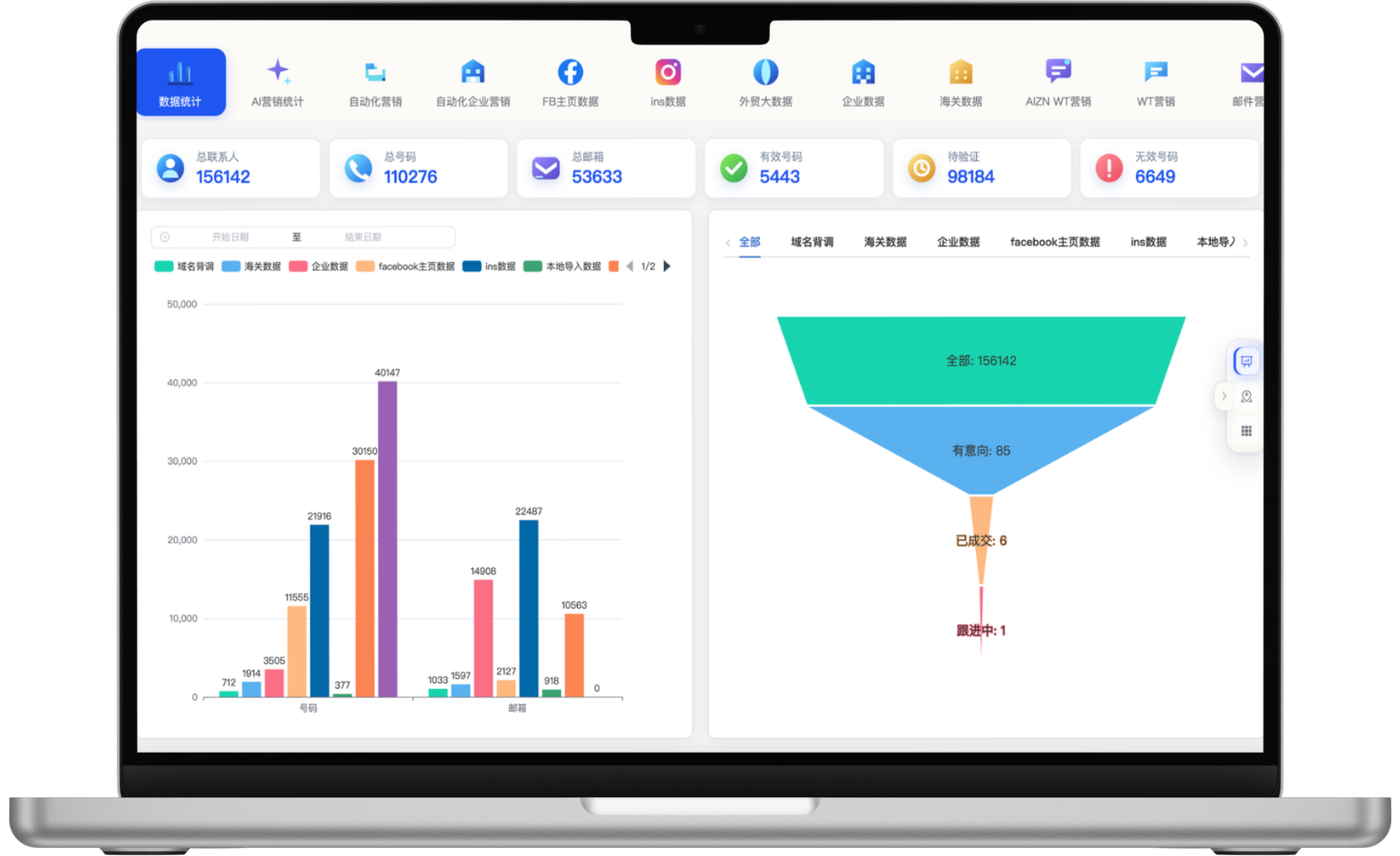
A focused workflow for turning fragmented information into consistent customer-development actions.
Find relevant buyers and trade records by product, code or company signal.
Review purchase frequency, timing and changes in trading relationships.
Map buyer-supplier relationships to discover upstream and downstream opportunities.
Use historical purchasing behavior to generate signals for sales prioritization.
Each section maps to the corresponding data source, workflow and operational requirement for this module.
Customs data can include available trade information such as products, values, quantities, origin, destination and trading partners. Analyzing purchasing regions, activity, scale and trends helps teams understand target markets, buyer history and competitor supply relationships before qualifying accounts for follow-up.
Published fields, coverage and update cycles vary by country and region. Availability depends on the target market.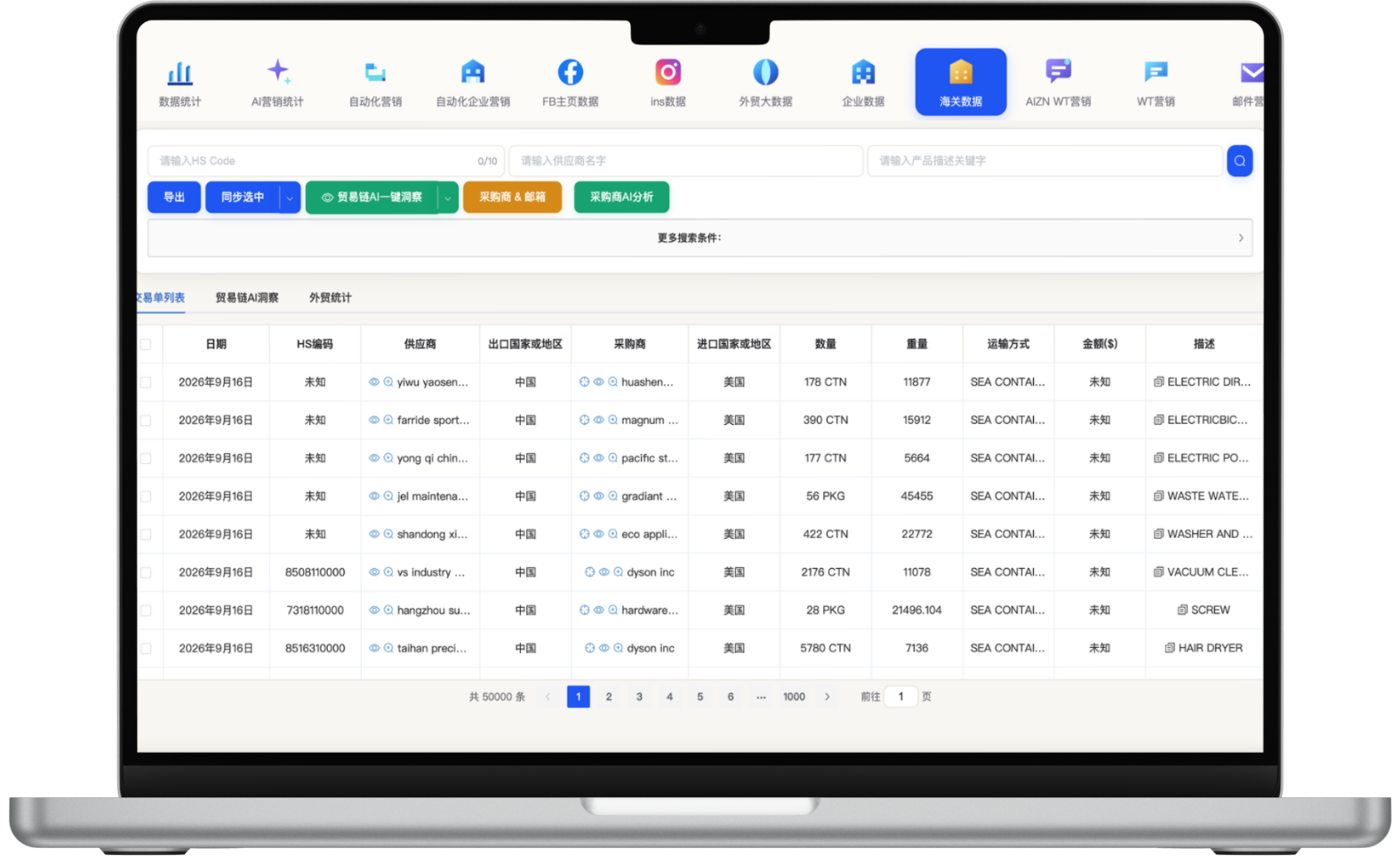
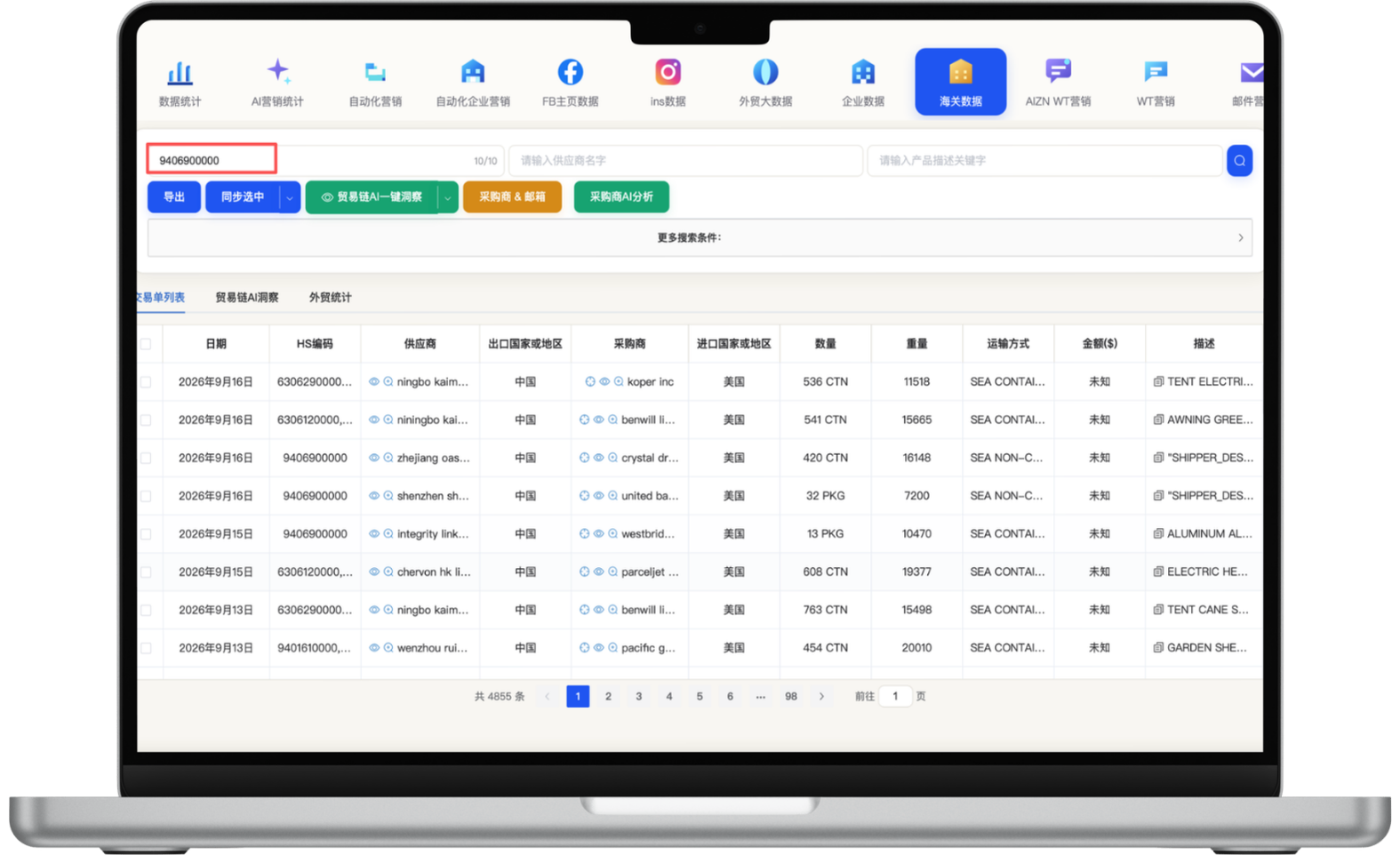
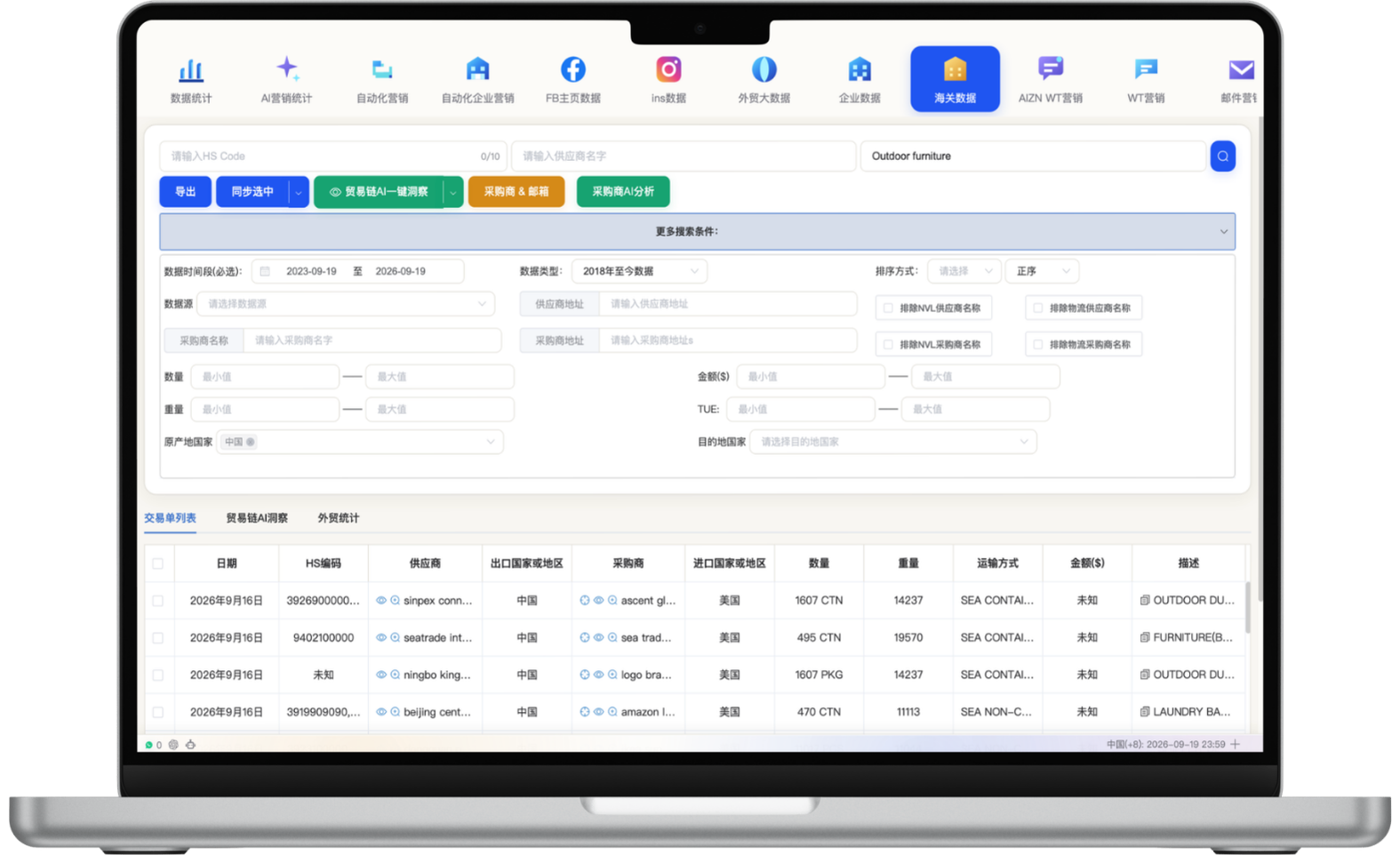
Enter the product HS code to identify overseas companies with verified purchases in that category and review buyers, suppliers, countries, quantities, weights, shipping methods and transaction records. Compared with broad keyword searches, HS codes reduce category ambiguity and surface prospects with demonstrated buying activity.
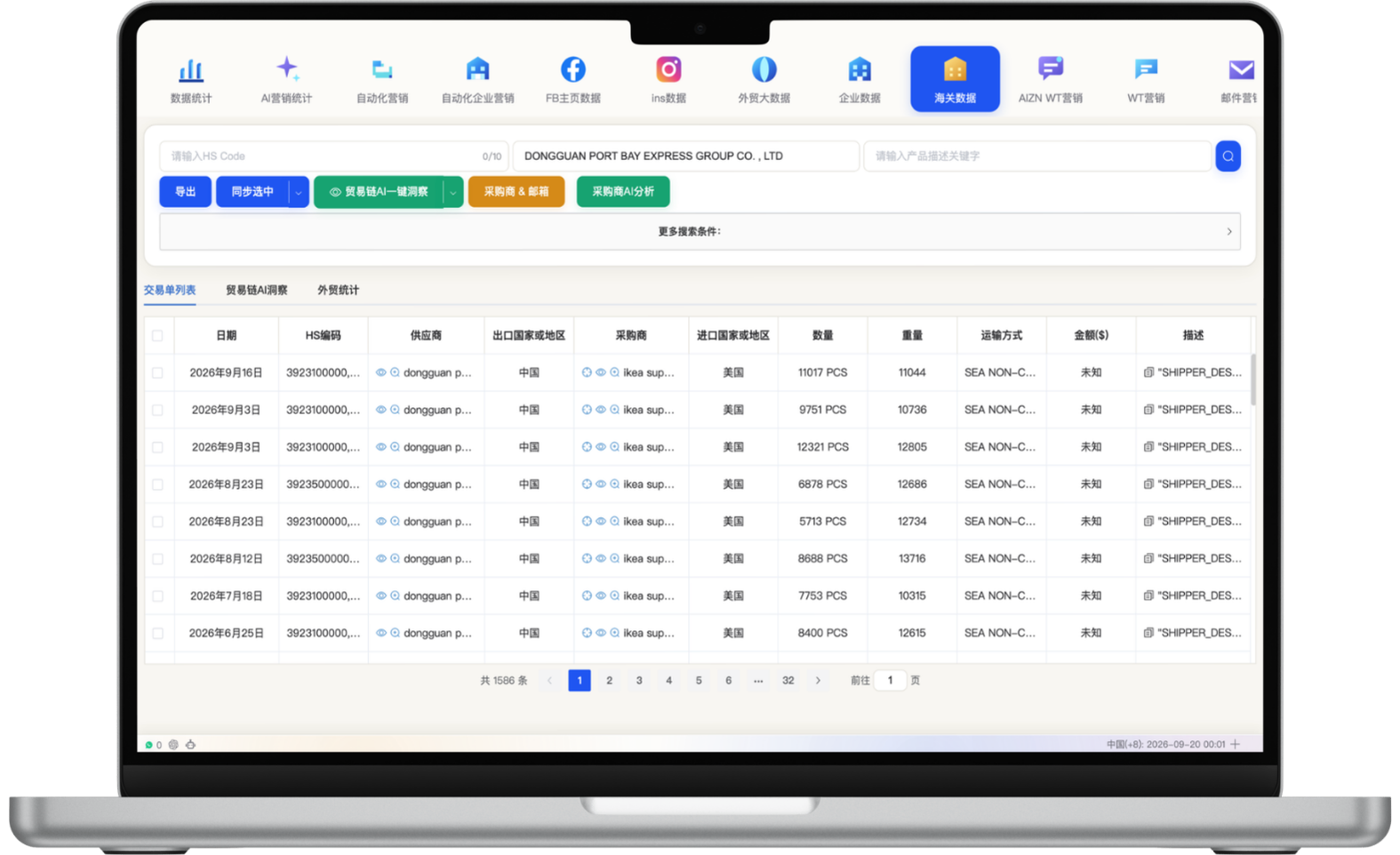
Enter a peer, competitor or known supplier name to identify overseas buyers connected through recorded transactions. These verified trade relationships quickly expand prospect lists, reveal which buyers competitors serve and help sales prioritize accounts with strong product-category fit.
When an exact HS code is unavailable, search by product or industry keyword and refine results by time period, origin, destination, buyer, supplier, quantity, weight and value. Multi-dimensional filtering uncovers new buyers while revealing market size, regional activity and demand trends.
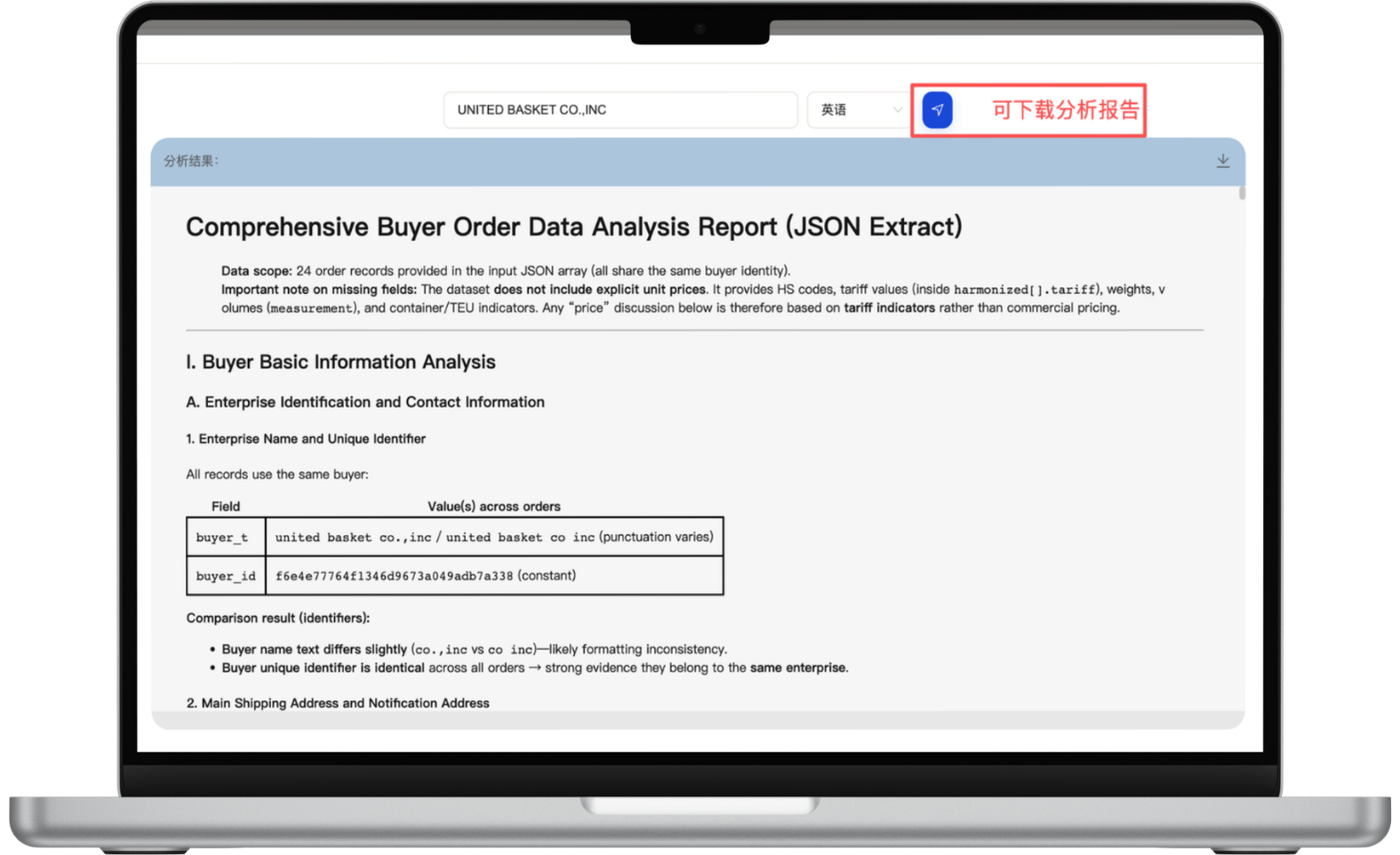
Enter an overseas prospect's company name to generate a structured AI analysis of historical orders, purchased products, transaction frequency, supplier relationships and buying changes, with a downloadable report. Sales teams can assess account value, purchasing cycles and product opportunities without manually reviewing every record.
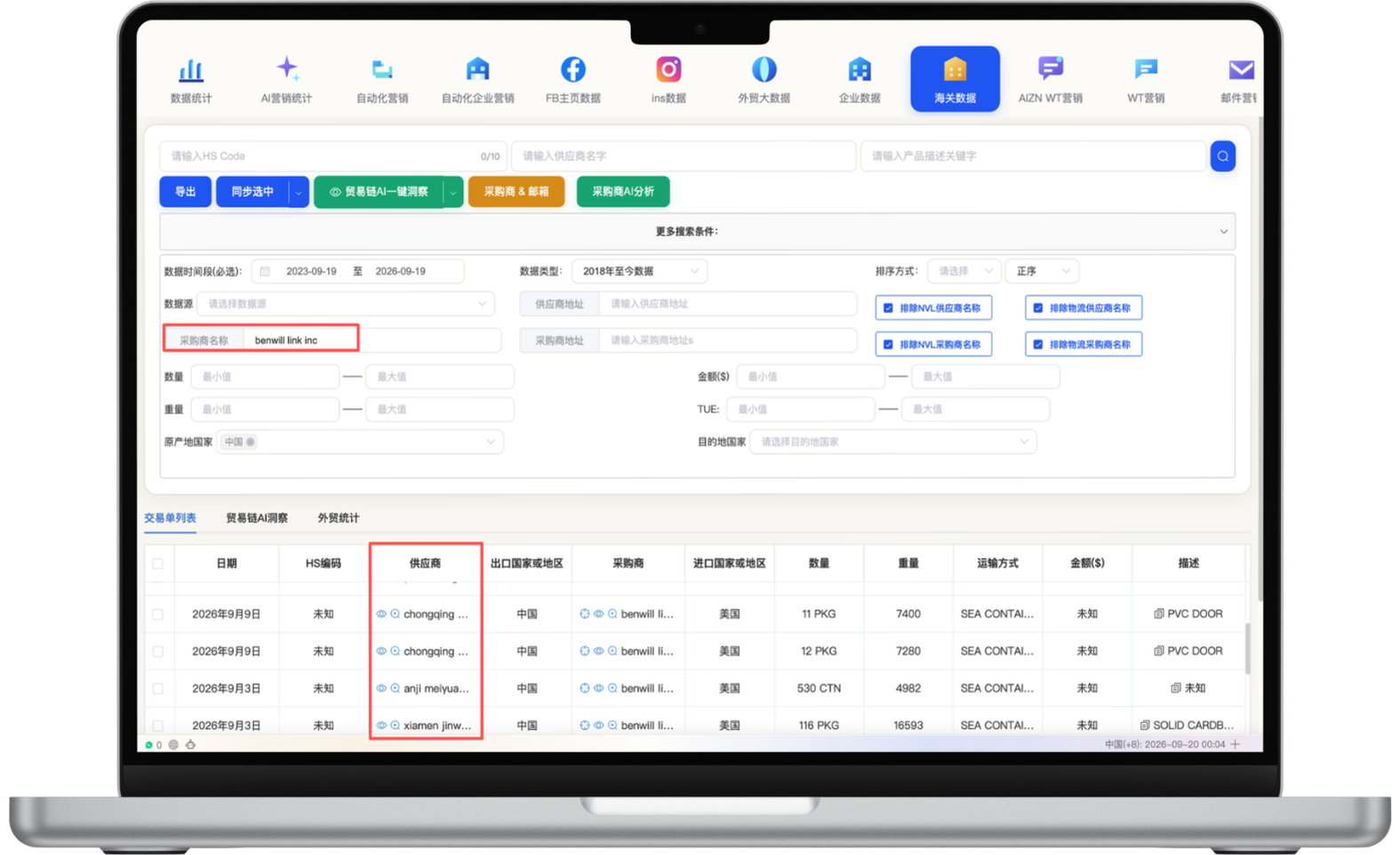
Enter a target buyer name to review its historical suppliers, purchased categories and transaction records. This reveals the buyer's existing supply chain, competing sources and sourcing stability, supporting differentiated quotations, alternative supply proposals and more relevant outreach.
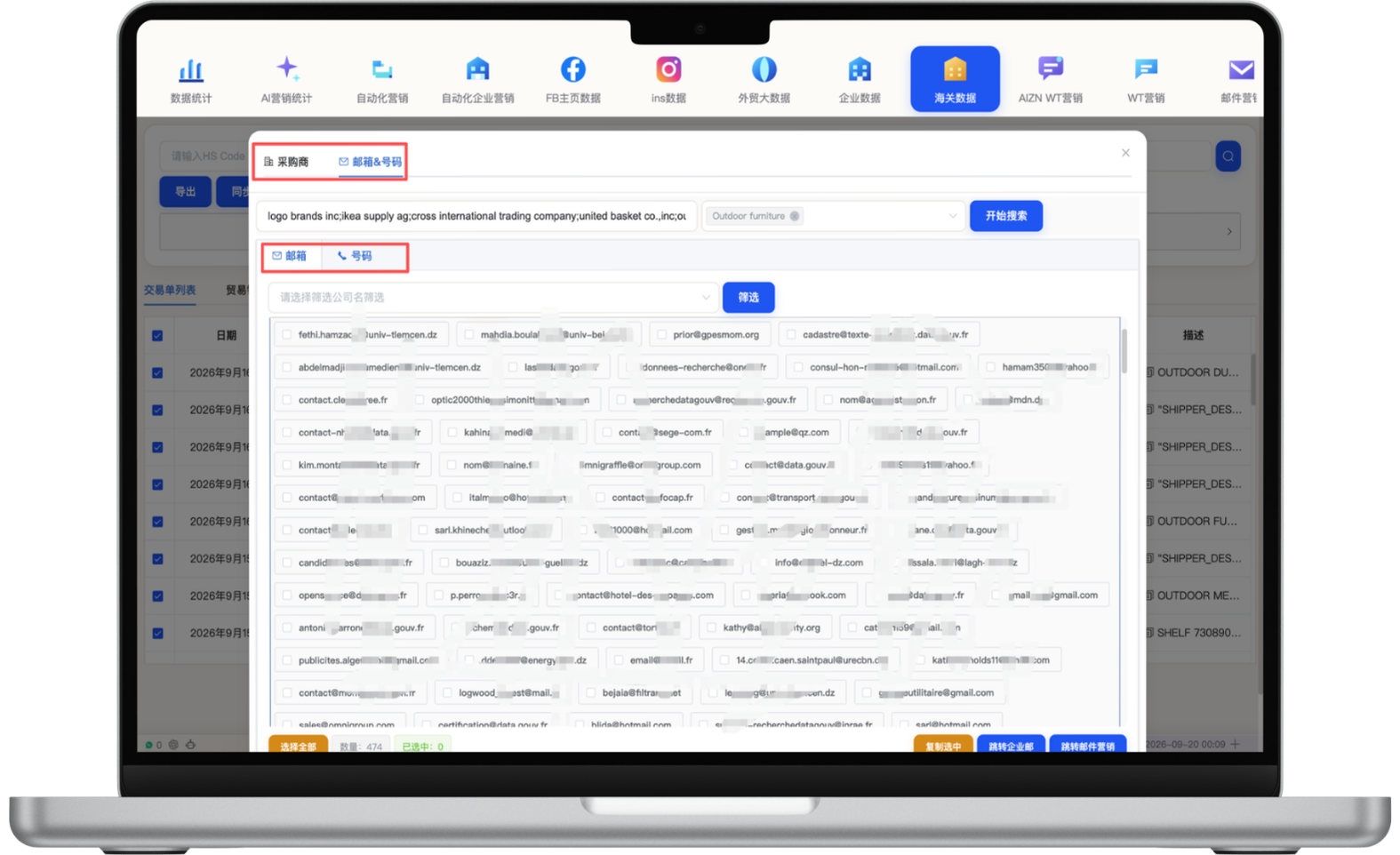
Use buyer names selected from customs data to enrich verifiable business emails and phone numbers in bulk. Qualified records can move directly into account management, email campaigns and sales follow-up, reducing repeated research and turning trade activity into actionable prospect lists faster.
Start with a category, code or known account.
Analyze historical buying and supplier relationships.
Prioritize using frequency, recency and market criteria.
Produce target-buyer lists and follow-up context.
Start with one measurable scenario, then extend the workflow as your team builds confidence.
Find active importers that regularly buy relevant products.
Understand a target buyer's current supply sources and changes.
Review purchasing volume and trend changes across countries.
Yes. Search relevant trade records by product term, category or available code, then qualify buyers.
The system uses historical frequency, recency and trading relationships as supporting signals, not a guarantee of future purchasing.
Coverage, fields and update cycles vary by country and region. Availability is confirmed for target markets before project setup.
Have another question? Visit the full FAQ for more answers.
Tell us your products, target markets and current process. We will help map the right data, channel and follow-up setup.